
Select Page
COVID Kickstarted Telemedicine Adoption With 4,000% Growth

COVID Kickstarted Telemedicine Adoption With 4,000% Growth

COVID Kickstarted Telemedicine Adoption With 4,000% Growth

September 13th, 2020

In 2019, telemedicine was used by less than 10% of Americans. Until then, it wasn’t as popular because most people felt unsure of how to use technology for a doctor’s appointment and quite frankly, didn’t feel the need to replace in-person visits. Regardless, the concept of telemedicine was slowly growing, but the rise of COVID-19, really propelled its widespread use.

One US study held at NYU Langone Health (NYULH), a New York City based healthcare system, collected data from their electronic healthcare record (EHR) system from January to April. The goal was to see how many visits were related to COVID, based on matching related key words (ie. COVID, fever, cough etc.) These visits were then divided into either urgent care or non-urgent care visits.

It was found that virtual urgent care (VUC- purple) numbers increased by over 600% and non-urgent visits (non-VUC- grey) grew by over 4000% (graph below). From March 4th to 19th alone, the amount of telemedicine urgent care visits increased over 16-fold, especially those around 20-40 years old.

There was a substantial increase in those even older than 40 (see table), where it might be assumed that those who are older might have a harder time with the technology associated with virtual care use.

The increased use of telemedicine was seen not only in patients, but medical providers as well. Within the span of 6 weeks, over 150 000 virtual care visits were conducted, with <100 000 of them being unique patients and <2500 unique medical providers.

Interestingly, despite this exponential uptake of telemedicine, the satisfaction of patients remained unchanged. Telemedicine proves to have great benefits, especially during a global pandemic. Since there was a marked turnover of virtual care visits, specifically in the urgent care setting, there was an increased capacity in the emergency room for those who needed it most. For non-urgent care, the increase in telemedicine proved its ease of use, overall satisfaction amongst patients and endorsing of social distancing, one of the limited available interventions against COVID. This transition to telemedicine is also spurring creativity in the way visits are being held and staff is being assigned.

Telemedicine decreases as in-person visits return

Though telemedicine showed great potential during the rise of the coronavirus, numbers have started to decrease as in-person visits become more available. Certain downsides to virtual care also lead to this decline. Due to the fear of contracting the virus, virtual visits may have increased, but some people have forgone being seen by their doctors completely. This can be problematic for those with chronic conditions who need regular check-ups and monitoring. Certain specialities also require parameters that cannot be met through a virtual visit. While general practitioners and mental health specialists may be able to conduct the majority of their visits online, doctors like podiatrists or oncologists may require a physical analysis of the patient for proper diagnosis and treatment.

There is also an idea that telemedicine will reduce the cost of healthcare. However, this claim is being questioned as some doctor’s doubt there will be a large enough turnover of patients to virtual care to reduce the cost of rent and employees’ wages.

Telehealth is here to stay

Regardless of the sudden drop in telemedicine, numbers are still significantly higher than what they were this time last year. It is apparent that an overdue shift in the healthcare system is finally taking place, however the challenge now lies in finding a balance between returning to regular in-person visits and finding which cases can continue to be online.

Overall, this report made clear the impact of COVID on virtual care. A concept that was once aspiring to grow for years, skyrocketed in just a matter of weeks.
 

Scientists Offering Homemade COVID Vaccines To Anyone Willing To Risk It

Scientists Offering Homemade COVID Vaccines To Anyone Willing To Risk It

Scientists Offering Homemade COVID Vaccines To Anyone Willing To Risk It

September 3rd, 2020

Months prior to the development of any coronavirus vaccine ready enough to enter clinical trials, the founder of a biotech company in the States had been self-administering his own vaccine. He was even publicly promoting his product on Facebook, trying to recruit any participants willing to pay the $400 he charged. Not only was a lawsuit filed against him, he was also confronted by the FDA.

This is not a unique case as several scientists around the world have been experimenting with this idea, claiming that desperate times call for desperate measures. As with most things, there are people for and against the risky work of these scientists. There are supporters who confide in their skillset while skeptics argue that no matter what claims are made, true safety and efficacy can only be tested in clinical trials. Typically, most clinical trials run under the following conditions:

  • randomized: participants are randomly assigned to treatment or control
  • double-blind: neither the researcher nor the participant knows which intervention is being given
  • placebo controlled: a “sugar pill” with no real effect

These specific conditions are put in place to ensure that the testing of newly developed products provide the most accurate results in a way that is safe and ethical for the participants involved.

One scientist however, argued that even traditional drug development begins with testing in animals. He used this claim to compare himself and his supporters as the animals to justify the administration of the vaccine. The problem with these homemade vaccines is not that the scientists are taking it themselves, it’s that they market it with unsupported claims.

This global pandemic has created a lot of panic amongst people and so they are willing to take more risks in hopes of finding a way to protect themselves. It seems as though the scientist who charged $400 per person took advantage of this fear and used it to propel the success of his vaccine. He claims that his vaccine not only offers protection against the virus, but also treats those who are infected.

Such misleading information not only gives people false hope, it also puts them at risk of contracting the virus if they think that getting the vaccine means they can stop taking the proper precautions.

Possibility of COVID Re-infection Doesn’t Seem as Far Off as Once Thought

Possibility of COVID Re-infection Doesn’t Seem as Far Off as Once Thought

Possibility of COVID Re-infection Doesn’t Seem as Far Off as Originally Thought

August 31st, 2020

To date, we know that the body mounts an immune response to COVID when infected. What we do not know, though, is how long this immunity lasts and whether or not it protects from re-infection. Recently, the attention of many has been spiked at the news of a young 25-year old male being infected twice, with two genetically distinct strains of COVID.

Genetic sequencing data showed that the two infection events contained certain mutations that would classify them as distinct strains. However, since the patient was re-infected within a short 2-month timeframe of initial infection, it is unlikely that this can be explained through evolution. Scientists are still unsure of the exact mechanism, but based off of the information to date, it seems that reinfection with COVID is possible, but rare.

Evidence on the relationship between immunity and other strains of coronavirus show that immunity to the disease can be lost within 1-3 years. Public health experts usually expect that if the immune response to initial infection is not enough to protect from re-infection, it would at least dampen the symptoms the second time around.

What is so interesting about the case of the 25-year old male is that, compared to the first time the patient tested positive, his symptoms seemed to have worsened the second time with him even having to be admitted to the hospital for oxygen support.

Immunity Can Be Strong but Not Always Consistent

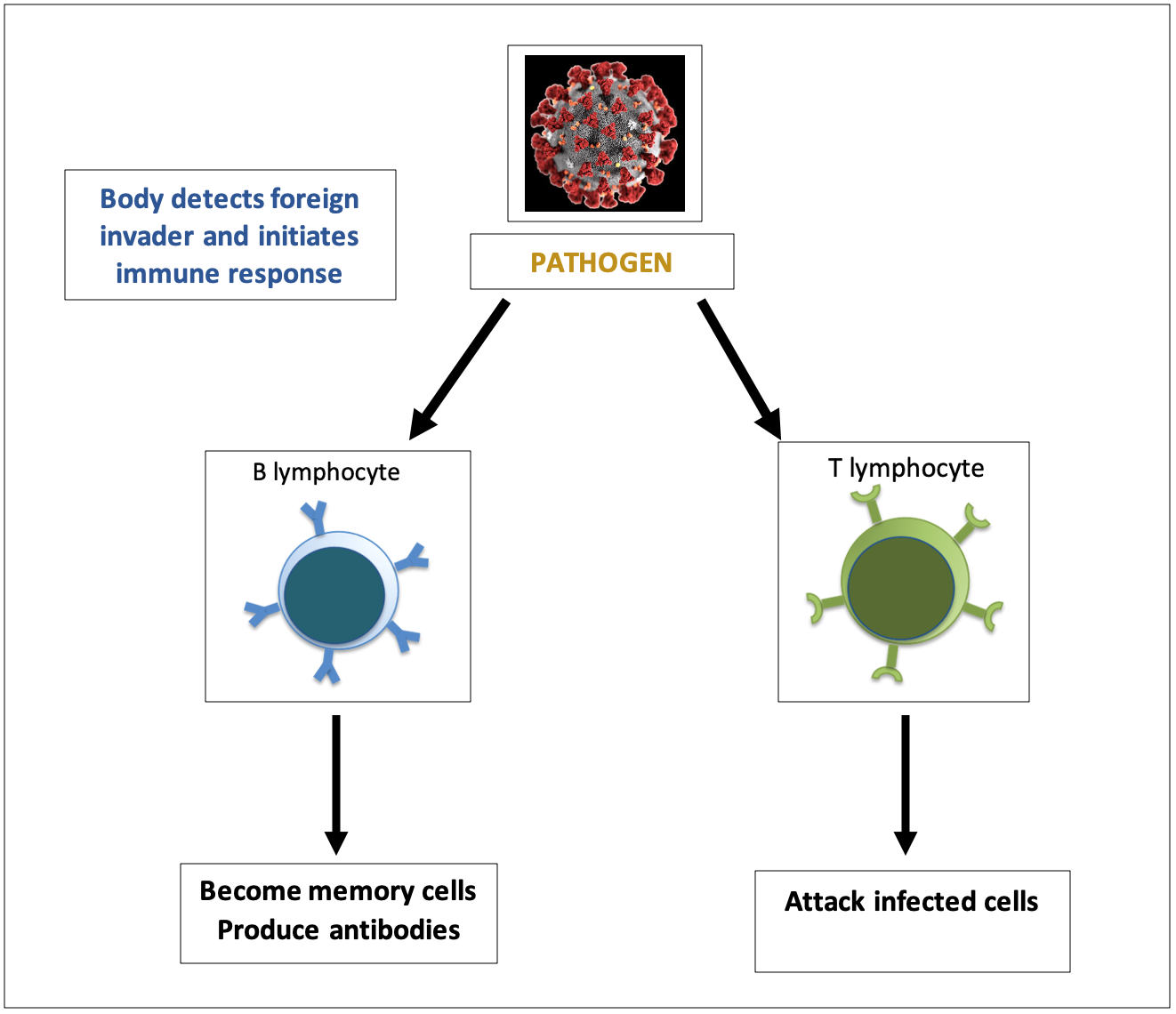
Normally, our immune system fights an infection by providing us with three main soldiers;

  1. Antibodies: molecules that attach to pathogens and block them from causing infection
  2. T-cells: attack infected cells and stop them from spreading
  3. B-cells: produce antibodies and memory cells that strengthen immune response the second time around

Problem is, with a new pathogen like COVID, until more data regarding the mechanism of its re-infection comes along, it is hard to tell how long the body’s immunity against it will last. However, like every mechanism in the body, no two people will have the same response to something. That goes for immunity too. The strong immune response a young healthy individual will mount to any given infection will not be the same as the much weaker one an older individual will produce. The severity of the disease will also produce differing immune responses in infected individuals. Someone with a severe case of COVID will likely produce a much stronger immune response compared to someone with a mild case.

Details regarding someone’s immunity can be seen through blood work. For infections that we are well acquainted with, scientists have a good estimate of what levels of antibodies/T-cells/B-cells need to be detected in the blood to know whether someone is protected. However, with a new virus like COVID, there is not enough data to establish such parameters. Because of this, it is hard to know if we build a strong enough immunity to fight off COVID and if it will last long enough to protect us from reinfection.

Inconclusive data complicates the development of a vaccine

The goal of a vaccine is to deliver a small enough dose of the pathogen to initiate an immune response strong enough to create memory cells. That way, if the individual is exposed to the pathogen at a later time, they will have a strong enough immunity to avoid disease. However, with the data we have so far, it seems as though initial exposure to COVID might not result in complete immunity. This can complicate the development of a vaccine that relies on this concept to be effective.

COVID Cost An Estimated 160x More Than Other Pandemics

COVID Cost An Estimated 160x More Than Other Pandemics

COVID Cost An Estimated 160x More Other Pandemics

August 28th, 2020

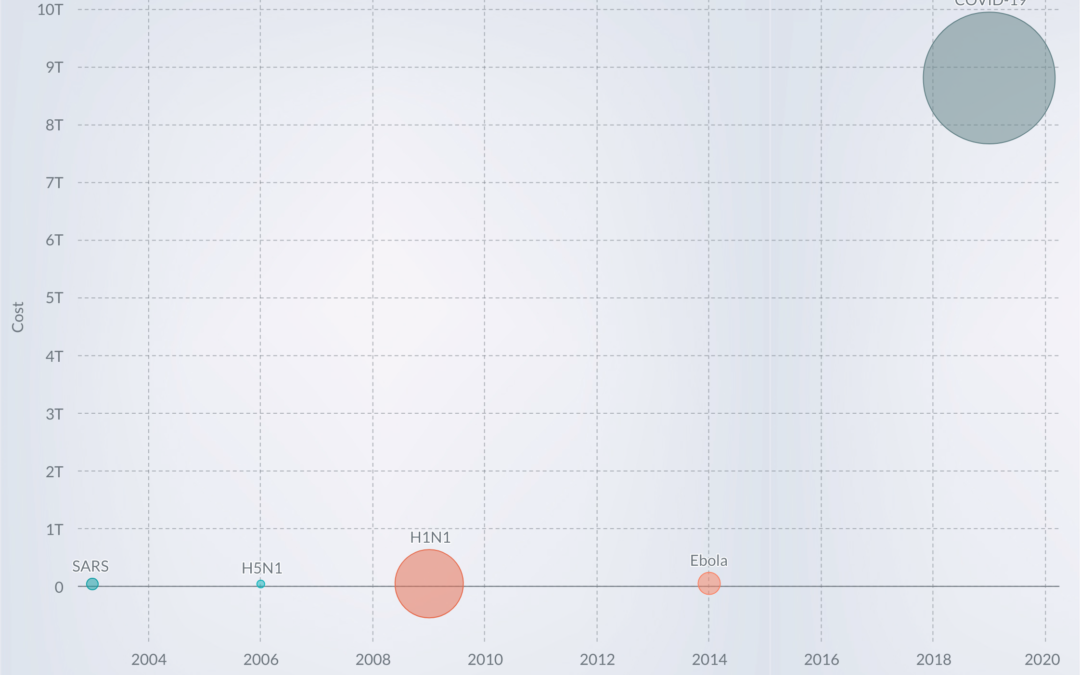
The Asian Development Bank (ADB) estimates that the global economic impact of COVID-19 could be $8.8 trillion. The ADB assumes that this scenario follows a 6-month containment (described below as “Long Containment Scenario”), where travel bans, productivity, and investment cuts last 6 months. The other scenario, a short-term containment, would last 3-months and result in a $5.8 trillion economic impact globally.

The table below shows the GDP impact (in millions $) and GDP (as a % drop from 2018) for each region.

The total impact figure includes health spending as well as shocks to:

  • trade (lower tourism, receipts and trade)
  • production disruptions
  • impaired labor mobility (transport resctrictions, work from home)
  • lower consumption growth
  • weaker investment growth

COVID Cost 160x More Than Ebola & Other Recent Pandemics

2003: SARS – $40 billion (770 death toll)

2006: H5N1 – $40 billion (175 death toll)

2009: H1N1 – $45 billion (200,000 death toll)

2014: Ebola – $55 billion (11,300 death toll)

2019: COVID – $8,800 billion (or $8.8trillion and 830,000 death toll)

Move Along “Anti-Vaxxers”, Rushed COVID Vaccine Spurts “Vaccine-Hesitans”

Move Along “Anti-Vaxxers”, Rushed COVID Vaccine Spurts “Vaccine-Hesitans”

Move Along “Anti-Vaxxers”, Rushed COVID Vaccine Spurts “Vaccine-Hesitans” 

August 27th, 2020

For the most part, people fall under one of two categories in regard to vaccinations; either strongly for or against them, the latter being referred to as “anti-vaxxers.” Though their movement has been protesting the use of vaccinations for years, more and more people are joining their side as hesitations regarding the marketing of a COVID vaccine are mounting. “Vaccine hesitant” is the term now being used to describe someone who is not completely against vaccines, but rather doubts their safety.

Even those who claim to be on the pro side have growing fears about the development of a vaccine as they feel it is happening too soon. Usually, the FDA requires data showing safety and efficacy from phase I-IV clinical trials prior to granting approval for marketing, a process that can span up to a decade. Now, it seems like there will be a COVID vaccine ready for use in the USA within months of the virus hitting. This hastiness has brought up safety and trust concerns.

Fear of Vaccine Being Used As Political Prop

The number of people switching to the anti-vaxxer side of the coin are not strictly limited to those with a strong aversion towards big pharma. Some speculate that the rush to develop a vaccine is due to the upcoming US presidential elections in November. The vaccine has the potential to be heralded as a political victory for President Trump, maybe even converting democratic votes. As seen below, in a poll hosted by Yahoo News, over 50% of self-reported “Democrats” would get vaccinated, compared to fewer than 40% of self-reported “Republicans”.  

Anti-vaxxers seem to be tilting the balance in their favour

Anti-vaxxers are noticing the shift in mentality in those who were once pro vaccination and using this weakness to prey on them. With everything going on in the world right now, tensions are at an all-time and disputes about differing opinions are only increasing. Arguments made against vaccinations range from COVID not posing a risk to young healthy individuals, the distrust towards big pharma and even conspiracy theories are being used to sway their targets.

 Pro-vaccine side needs to win back votes to provide herd immunity

Public health experts fear that the percentage of people who will get the vaccine is not high enough to achieve herd immunity (when vaccination levels in a community are high enough to provide non-immunized individuals with indirect protection from disease.) A strong argument proving the necessity of a vaccine against COVID is needed before the anti-vax community takes over and leaves individuals with the risk of getting the virus up to chance.