Select Page
New Weight Loss Paradigm: Diabetic Drugs Showing Promise As Treatments

New Weight Loss Paradigm: Diabetic Drugs Showing Promise As Treatments

New Weight Loss Paradigm: Diabetic Drugs Showing Promise As Treatments

Monday February 22nd, 2021

  • An anti-diabetic drug, semaglutide, used for treatment of type 2 diabetes has shown to help reduce 15% of body weight over a 68-week period
  • In a Phase 3 study, semaglutide demonstrated superior efficacy and convenience with once weekly injection. However, the drug will likely be expensive as the lower approved dose to treat diabetes costs $1,000/month.
  • The drug is under FDA review and a verdict is expected by mid-2021
  • Another anti-diabetic drug, tirzepatide, has also reduced weight by 13.9% in clinical trials

An anti-diabetic drug used for treatment of type 2 diabetes has shown to help reduce 15% of body weight over a 68-week period (or 1.3 years). The drug is Ozempic (semaglutide) and sold by large pharma company Novo Nordisk. In December 2017, Ozempic was approved for type 2 diabetes as a 1mg weekly injection. While studying Ozempic for type 2 diabetes, weight loss was observed in obese patients. This prompted studying the drug as a weight loss treatment. It is now under FDA review to be used as an anti-obesity drug at a 2.5mg, once weekly dose.

The Weight Loss Study

The Phase 3 study, called STEP1, enrolled 1961 adults with a body mass index (BMI) of 30 or more. For context, a BMI between 18.5-25 is considered “normal weight” (see image below). 2/3rd of the patients received semaglutide injections once weekly and the other 1/3rd received a placebo.

In addition to the drug, participants received individual counseling sessions to help them adhere to a reduced calorie diet (500-kcal deficit per day) and increased physical activity (150 minutes per week).

The primary endpoints of this study were:

  1. to observe the percent change in body weight
  2. achievement of 5% or more reduction in body weight after 68 weeks

What did the data show?

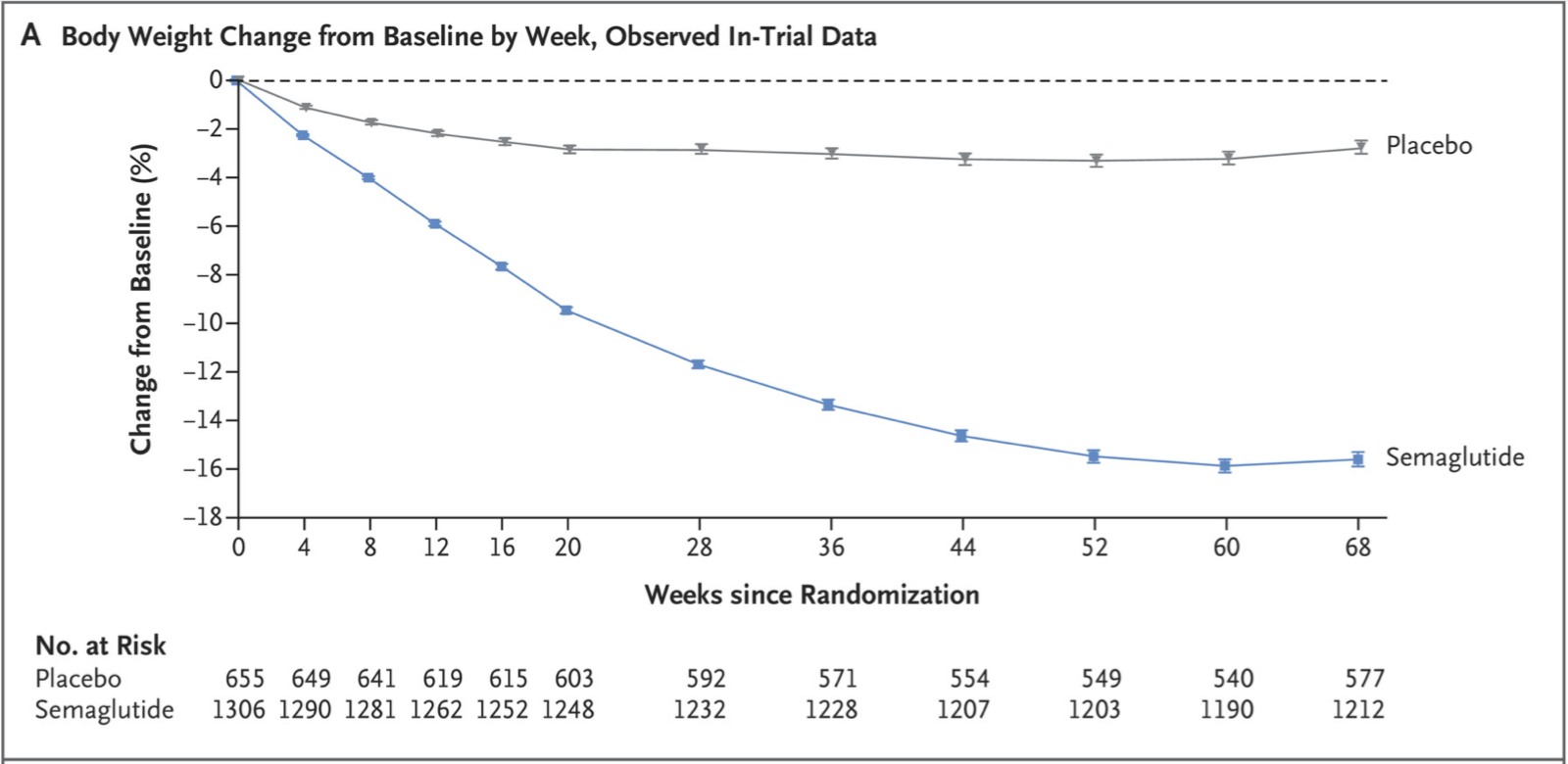
Both the primary endpoints were met. Those who got the drug lost 14.9% of their body weight, on average, compared with 2.4% among those receiving the placebo. This is a 12.4% body weight difference over 68 weeks (see below).

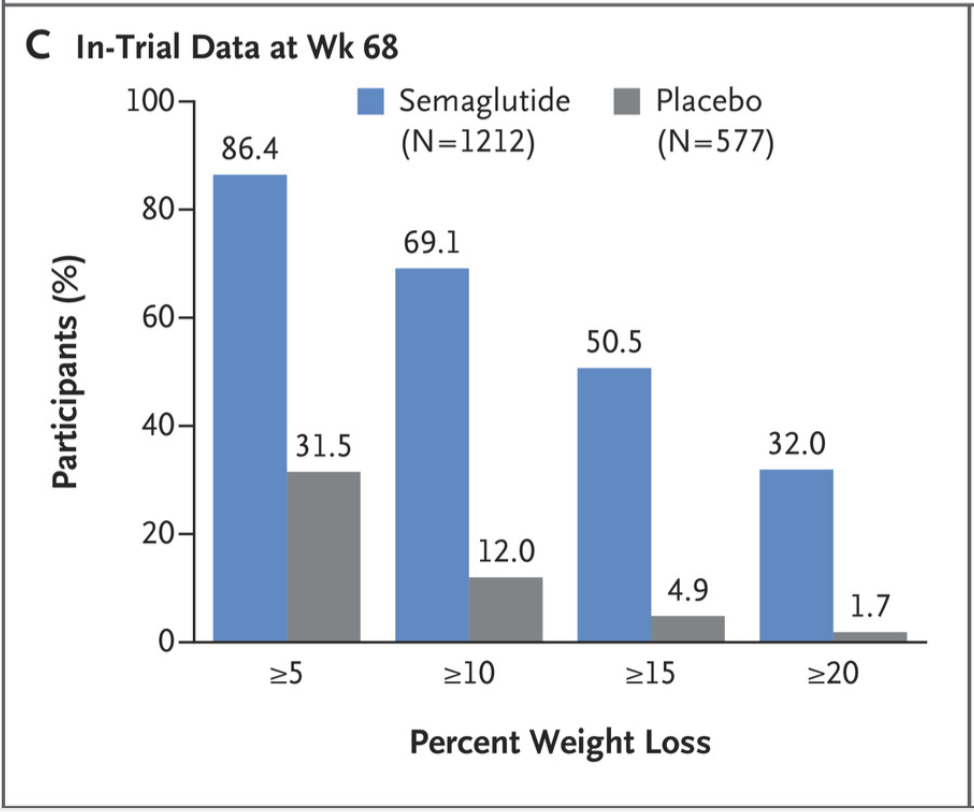
Also, compared to those who were in the placebo group, those who received 2.4 mg of semaglutide were more likely to lose 5% or more of body weight at 68 weeks. 1047 participants (86.4%) were able to achieve this threshold. The image below also shows the percentage of people that were able to lose 10%, 15% and 20% or more of body weight at the end of the trial compared to baseline.

The drug was also effective at reducing waist circumference (-13.54 cm vs. -4.13cm in placebo), BMI (-5.54 vs. -0.92) and blood pressure. Symptoms of diabetes and pre-diabetes improved in many patients.

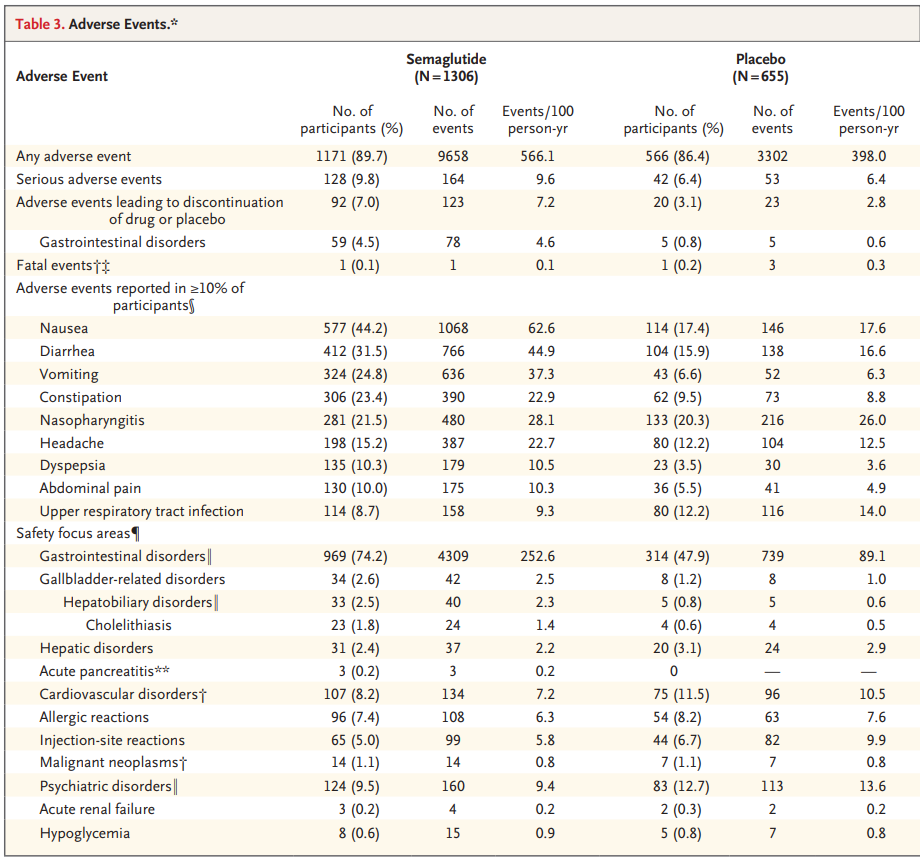
Side effects of semaglutide were relatively low as the drug showed similar adverse events to placebo. 89.7% of participants taking the drug reported an adverse event, compared to 86.4% on placebo. The most common events were nausea in 44% of patients, diarrhea in 31.5% and vomiting in 24.8%. 

How Does Semaglutide Compare to Other Weight Loss Interventions

Those who are overweight or obese are recommended to lose 10-15%, or more, of their weight. This was achieved in the semaglutide group. About 70% of participants lost 10% and ~50% lost 15%. Importantly, about 30% of participants in the experimental group, were able to lose 20% of their baseline weight. This is very significant as that much weight loss is usually seen in patients 1-3 years after bariatric surgery (surgeries on the digestive system to help with weight loss).

Phentermine, another weight loss drug, demonstrated a 7.5% drop in body weight, on average, and can be taken only for a short time. After it is stopped, the weight is regained. This is also expected with semaglutide. Patients would have to take it for a lifetime to prevent the weight loss from coming back.

Another bonus of semaglutide over current approved drug interventions is that the once weekly injection of semaglutide may increase compliance compared to other approved drugs that need to be taken several times a day.

To really understand the potential superiority of semaglutide against other treatments, head-to-head trials will need to be run. The study discussed above had a few demographic limitations as well, which included only 26% males and 75% white. These demographics are not reflective of the obese population. In the US, for example, obesity is equally prevalent in both males and females and actually more prevalent in non-white adults. According to the CDC, Non-Hispanic black adults had the highest prevalence of obesity (38.4%), followed by Hispanic adults (32.6%) and non-Hispanic white adults (28.6%).

Bottom Line: Semaglutide has shown superior efficacy and convenience with once weekly injection, compared to other weight loss treatment options. However, the drug will likely be expensive as the lower approved dose to treat diabetes costs $1,000/month.

Semaglutide is a synthetic version of a naturally occurring hormone that increases insulin production and lowers blood sugars. This slows down digestion in the stomach and lowers appetite. Because the drug is relatively new, a high-dose regimen has not been studied long enough to know if it has serious long-term consequences.

Other Diabetic Drug Showing Similar Weight Loss Results

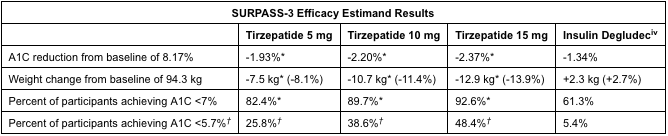
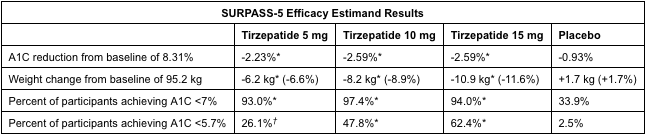
Tirzepatide, by pharma company Eli Lilly, is also being studied for use in adults with type 2 diabetes. Their clinical trials, SURPASS-3 and SURPASS-5, looked at the use of 5 mg, 10 mg, 15 mg of tirzepatide or insulin glargine (placebo) for glucose management. In SURPASS-3, the highest dose of tirzepatide (15 mg) reduced weight by 13.9% (12.9 kg) and A1C (blood glucose test) by 2.37%. In SURPASS-5, weight was reduced by 11.6% (10.9 kg) and A1C by 2.59%.

Tirzepatide, like semaglutide, is a once weekly injection. It is a dual glucose-dependent insulinotropic polypeptide (GIP) and glucagon-like peptide-1 (GLP-1) receptor agonist. Studies have shown that GIP decreases food intake and increases energy consumption which, in combination with a GLP-1 agonist, lead to significant effects on weight and glucose. The side effects reported were mostly gastrointestinal-related and mild to moderately severe.

Both tirzepatide and semaglutide are currently in ongoing clinical trials.  Tirzepatide is currently in Phase 3 for management of adults with type 2 diabetes and weight reduction. The Phase 3 SURPASS program began in 2018 and has enrolled over 13,000 participants. Results are expected in 2021.

In December 2020, the makers of semaglutide submitted an application to have it reviewed for FDA approval as a weight-loss drug. The company expects a verdict from the FDA as soon as mid-2021 and a decision in Europe by early 2022.

Both drugs seem like prospective alternatives for those who require weight management and have type 2 diabetes. Results from clinical trials show that they both significantly reduce body weight and glucose blood levels with mild side effect profiles. The next step is to hopefully get these drugs to market to provide a safe, convenient and affordable alternative to those who are overweight or obese.

A new weight-loss treatment paradigm can be upon us.

Moderna CEO Is Right, COVID Is Here To Stay

Moderna CEO Is Right, COVID Is Here To Stay

Moderna CEO Is Right, COVID Is Here To Stay

Tuesday, January 19th, 2021

  • Though pharma companies have boasted about the efficacy of their vaccines, protection for asymptomatic patients and those with milder COVID seems less effective
  • Vaccine rollout has been slow since its debut to the market and uptake is also seeing resistance
  • These factors can cause COVID to stick around forever, much like the annual flu

Last week, the CEO of Moderna warned that COVID “is not going away” and the world will have to live with it “forever”. Health experts have echoed similar thoughts, claiming that the virus will become endemic, meaning present in the population at all times. How is this plausible with Moderna and Pfizer’s vaccines showing 95% efficacy?

Like all technical topics, the devil is in the details. The vaccines are generally 95% effective, but not in everyone.

Below are a few factors that can cause COVID to stick around “forever”.

  1. Protection of Asymptomatic Patients is Still Unknown

Moderna’s vaccine showed 94.1% efficacy at preventing Covid-19 illness, including severe illness. This efficacy figure included all subgroups. However, Moderna has not completed a full analysis on the efficacy of their vaccine against asymptomatic infection. This is important because asymptomatic patients are believed to make up approximately 15% of all COVID infections.

In Moderna’s clinical trial, 38 participants in the placebo arm tested positive for COVID without exhibiting symptoms. In the vaccine arm, there were 14 asymptomatic patients. With this very limited data set, Moderna’s vaccine seems to protect asymptomatic patients, but not anywhere near 95%. The efficacy here is in the 60% range. Keep in mind, this analysis is not yet complete, and the sample size is small, so it is not conclusive.

Similarly, the Oxford/AstraZeneca vaccine reported efficacy of 70%. This figure was bundled and included analysis of four studies conducted across three countries: UK, Brazil and South Africa. Further investigation found that in those who are asymptomatic or symptoms are unknown, the efficacy drops down to just 27% (see figure below).

Pfizer has not yet released any data on the protection of their vaccine for asymptomatic patients.

Bottom Line: There’s not enough evidence yet on whether the approved vaccines prevent asymptomatic infection and transmission. The limited data on this asymptomatic patient population has demonstrated significantly lower protection than the headline figures. Asymptomatic patients make up approximately 15% of infections.

2. Protection Against Mild Infection Is Likely Lower Than 95%

Chinese company, Sinovac, came out with their vaccine candidate, CoronaVac, which the Brazilian government has given the green light for use. At first, the vaccine showed 78% efficacy. However, a follow-up trial shows that efficacy is only 50.4%. Why the significant difference?

Sinovac’s vaccine is 78% effective against mild to severe cases, but this figure does not include those with very mild infections. With this additional detail, the efficacy drops to 50.4%. The efficacy seems to decrease as the severity of COVID decreases. This means that Sinovac’s vaccine protection drops with mild cases of COVID.

This same notion could be applicable to Moderna/Pfizer. Both companies bundled their results when reporting the 95% “headline” efficacy. They have yet to release protection by severity of disease.

3. Rollout Has Been Slow & Uptake Is Seeing Resistance

According to the Bloomberg Tracker, there have been more than 44 million shots administered in 51 countries. Though that may seem like a large absolute number, as a proportion of the population, the figure is quite low. Distribution and administration of the vaccine, in the US/EU, at least, has been underwhelming.

The US began rolling out the vaccine to front-line healthcare workers on December 14 and has already reached 14.7 million doses. One country that has really stood out in the crowd is Israel. They have administered over 2.5 million doses with a population of just 9 million, compared to the US with a population of over 300 million. To look at it from a fairer comparison, per 100 people, the US has vaccinated 4.48 people versus Israel who has vaccinated 28.52. That is nearly 6x more vaccinations per 100 people.

At the current pace of vaccination, the US is expected to reach herd immunity in 558 days (approximately 1.5 years) in mid 2022.

Not only has the rollout of the vaccine been slow but its uptake is also seeing resistance. Many are worried about its production, claiming that it made it to market way too fast. To read more about the new technology used to develop the vaccine, read LifeScite’s Moderna and Pfizer Challenge the Status Quo with New mRNA Vaccine Approach.

One study of 18,000 adults across 15 countries found that on average, 73% of participants would get a COVID vaccine. However, this percentage is down from 77% (August), especially in China, Brazil, Australia and Spain.

What we know for sure is that all the vaccines are very effective at protecting against severe infection. What we need now is more comprehensive data on specific subgroups of infections, such as asymptomatic and less severe disease.

Early and limited data shows that protection is lower in mild/asymptomatic disease. This will limit COVID but not eradicate it. It should not be a surprise because the annual influenza virus (flu) has become endemic, and it seems COVID will also.

The Government Measures Most Effective At Limiting COVID Spead

The Government Measures Most Effective At Limiting COVID Spead

The Government Measures Most Effective At Limiting COVID Spread

December 28, 2020

  • A study analyzed the most effective interventions at lowering the spread of COVID
  • Closing all educational institutions, limiting gatherings to 10 people or less, and closing face-to-face businesses each reduced COVID transmission considerably. The additional effect of stay-at-home orders was comparatively small.

Most countries have implemented lockdown interventions this holiday season to halt the spread of COVID. This article will analyze the effectiveness of certain lockdown interventions. The analysis is sourced from a study that measured the effectiveness of lockdown measures (ie. closing all educational institutions, limiting gatherings to 10 people or less, etc). Data was collected from 41 countries during January – May 2020. The premise of the study was to see whether or not individual lockdown policies were able to lower the reproduction number, Rt, over time.

To read the preceding article about which countries were most impacted economically, check out LifeScite’s Debunked: Economic Implications of COVID Lockdowns.

What is Reproduction Number (Rt)?

Rt measures how many people get infected from the spread of the virus. For example, if Rt is 4.0, then one infected person will spead the virus to 4 other people (see image below). The goal is to get Rt lower than 1.0, which would mean that each infected person spreads the virus to less than one other person. This is how the spread of a virus is stopped. For comparable purposes, the COVID Rt number in the US is approximately 1.01. Click HERE to see estimates of Rt in each state.

Most Effective Measure: Limiting Gatherings

The effectiveness of each lockdown measure was expressed as a percentage reduction in Rt (see image below). The % reduction in Rt for each measure was:

  • Limiting gatherings to 1,000 or less: 23%
  • Limiting gatherings to 100 or less: 34%
  • Limiting gatherings to 10 people or less: 42%
  • Closing high risk face-to-face businesses: 18%
  • Closing non-essential face-to-face businesses: 27%
  • Closing schools & universities: 38%
  • Stay at home order: 13%

The results show that limiting gatherings and closing of businesses were effective interventions at reducing virus transmission. It might be thought that closing all non-essential businesses might be more effective than targeted closures, but the results show that they were only slightly more effective.

In fact, targeted closures like those with a high infection risk (ie. bars and restaurants) might be a more promising option in some cases.

Limited gathering to a maximum of 10 people was the most effective number, versus 100 or 1000 people. However, it is important to note that the data used in this study was collected during a time (Jan-May) where gatherings were likely already indoors because of the weather. The study also found that closing schools and universities in conjunction had a robust effect though their individual effects were not distinguishable since they closed around the same time.

Bottom line: The most effective lockdown intervention was limiting gatherings to 10 people or fewer. The least effective lockdown intervention was stay-at-home orders.

Combining Lockdown Interventions Lowered Rt by 77%

The effectiveness of lockdown policy combinations was also evaluated and found to have a 77% reduction in Rt.  

Across all countries studied, the mean Rt without any measures was 3.3. Starting from this number, the estimated Rt likely could have been brought below 1.0 by implementing at least 3 lockdown policies: closing schools and universities, high-risk businesses, and limiting gathering sizes to at most 10.

Bottom Line: Implementing a combination of the 3 most effective lockdown interventions could lower Rt below 1.0. These are  limiting gatherings to less than 10 people, closing all schools & universities and closing high-risk non-essential businesses (ie. bars, restaurants, gyms).

Although, the results provide us with certain insights on the effectiveness of several lockdown measures on COVID transmission, there are limitations to this study:

  1. The effectiveness of the measures studied depends on the context of their implementation (ie. implementation of other interventions, the countries’ demographics etc)
  2. The study did not take into consideration certain interventions with already promising results (ie. testing, tracing and case isolation)
  3. Rt may have been reduced by behavioural changes and unobserved interventions such as wearing masks

Lowering Rt can be achieved through the implementation of at least 3 measures. The most effective interventions to minimize the spread of COVID are limiting gatherings to less than 10 people, closing all schools & universities and high-risk non-essential businesses.

Debunked: Economic Implications of COVID Lockdowns

Debunked: Economic Implications of COVID Lockdowns

Debunked: Economic Implications of COVID Lockdowns

December 17th, 2020

  • Lockdown policies have a negative economic impact on GDP. The most open countries experienced an average GDP increase of 2.85%, while the most restricted countries saw GDP decline by an average of 6.50%
  • Lockdowns did not have a material impact on the unemployment rate. In fact, the countries with stricter lockdowns experienced a smaller jump in unemployment rate than countries that remained open
  • Lockdown impact on health is not as conclusive, mostly because cases & deaths are not an accurate measure. This is due to countries enforcing lockdowns to halt the spread of COVID after an outbreak

To shut down or not to shut down. That has been a topic of debate amongst policymakers with the spread of COVID. Below, an analysis is performed assessing how the economies of each country performed given the lockdown measures they took.

It is presumed that countries must decide between economy or health. Data shows that this trade-off is partly true. The sweet spot is somewhere between stay-at-home orders and complete mobility.

Methods Used for Measuring Impact

Mobility & strictness of lockdown: Google’s Community Mobility Report was used to measure the lockdown severity of each country. This “mobility index” tracks the sum of movement trends in workplace and residential areas, as of December 11, 2020.

Economic measures: Year-over-year GDP change was the first economic metric used to measure the impact of lockdowns. The change in the unemployment rate during 2020 was the second economic metric analyzed. How much the unemployment rate changed from the most recent data available for 2020, compared to the start of 2020.

Health measures: The number of COVID cases per million population was one health metric used. This is the number of people infected with COVID-19 for every million people in the population. The other was death rate per 100K population, the number of people that died for every 100,000 people in the population.

A quadrant matrix for each above metric is used to visually represent rankings.


Economic Data

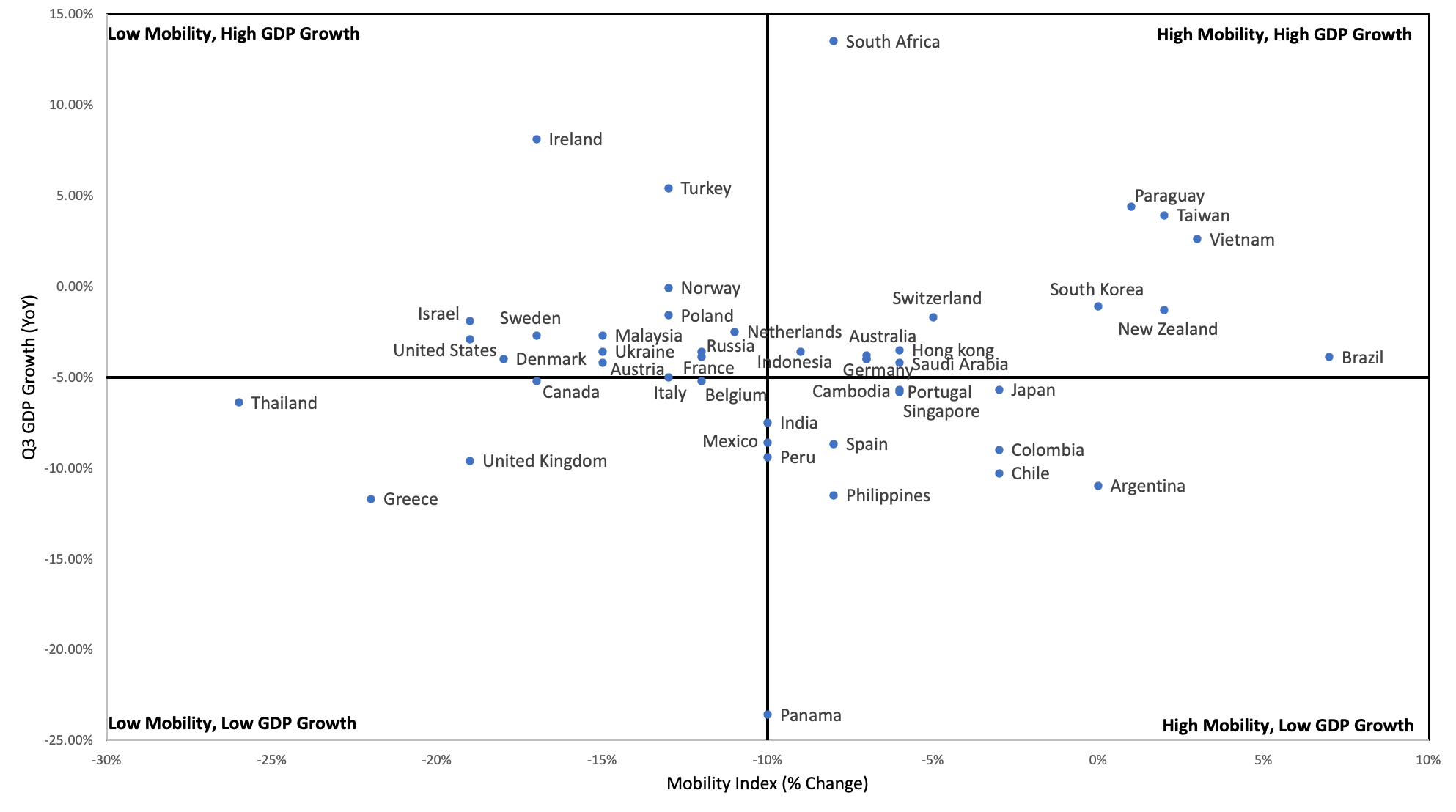
Mobility index compared to the Q3 GDP growth (year over year)

A low mobility index is representative of countries that took stricter lockdown measures versus those that did not. The higher the mobility index, the fewer restrictions because there was more movement in workplaces and residential areas. The GDP is a percent change in GDP compared to the same time last year (Q3 2019).

The top left quadrant shows the countries that had a low mobility index and a relatively high GDP growth. Ireland and Turkey were able to grow their GDP despite being locked down. The top right quadrant shows that Paraguay, Taiwan and Vietnam had a high mobility index while still maintaining GDP growth.
The bottom left quadrant shows the countries that were under lockdown (low mobility) and had a decline in their Q3 GDP. The U.K. and Greece were the most impacted economically by their lockdowns. The bottom right quadrant shows the countries that were relatively open and had GDP declines (ex. Argentina, Chile and Colombia).


The belief is that if a country goes through a lockdown (low mobility), the economy is going to see a negative impact and therefore result in a greater GDP decline. Less movement should lead to less economic growth.

The data supports this notion. The top 10% of countries with highest mobility saw GDP increase an average of 2.85%. The bottom 10% of countries with lowest mobility saw GDP decline an average of 6.50%.

There is a clear correlation between lockdowns and GDP decline. The most open countries experienced an average GDP increase of 2.85%, while the most restricted countries saw GDP decline by an average of 6.50%. Locked down economies suffer more productivity loss than the economies that remain open.

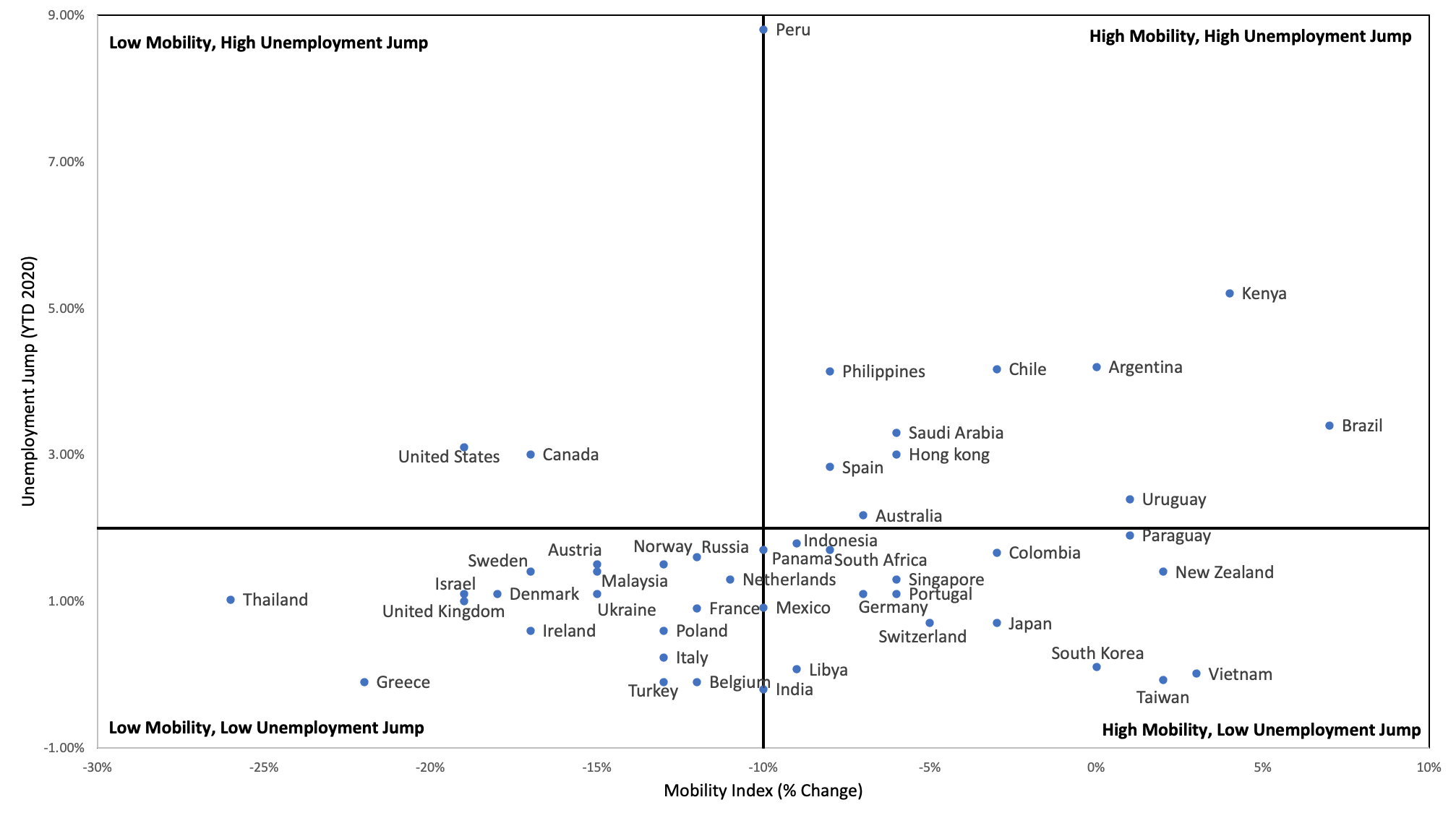
Mobility index compared to the change in unemployment rate (year to date 2020)

The jump in unemployment is the difference between the unemployment rate at the beginning of 2020 versus the most recent 2020 figures. The most recent unemployment data ranges from Q2 to November unemployment numbers.

Top left quadrant shows that the United States and Canada had a low mobility index and a high unemployment jump. This means that these countries went into lockdown and thus, the highest proportion of people lost their jobs. Top right quadrant shows that Brazil and Kenya were unable to maintain their jobs despite not being under strict lockdown policies.
Bottom left quadrant shows the countries that were under lockdown and were able to keep their job markets relatively stable. Belgium and Turkey kept their unemployment rates the same as before COVID, even with a decline in mobility. Bottom right quadrant shows the countries that were not under strict lockdown and kept their job market relatively stable. Vietnam and Taiwan did not see a change in unemployment rate during 2020.


On average, unemployment was not impacted by mobility. This can most likely be attributed to work-from-home policies, which had a large number of people remaining employed even with offices being shutdown.

The top 10% of countries with the highest mobility saw unemployment rate increase by an average of 1.99% in 2020. The bottom 10% of countries with lowest mobility saw unemployment rate increase by an average of 1.22%.

Lockdowns did not have a material impact on the unemployment rate. In fact, the countries with stricter lockdowns experienced a smaller jump in unemployment rate, than countries that remained open. Technological advances and work-from-home policies are two factors that positively impacted unemployment, and as a result, saved many jobs that would have otherwise been lost.   

Healthcare Data

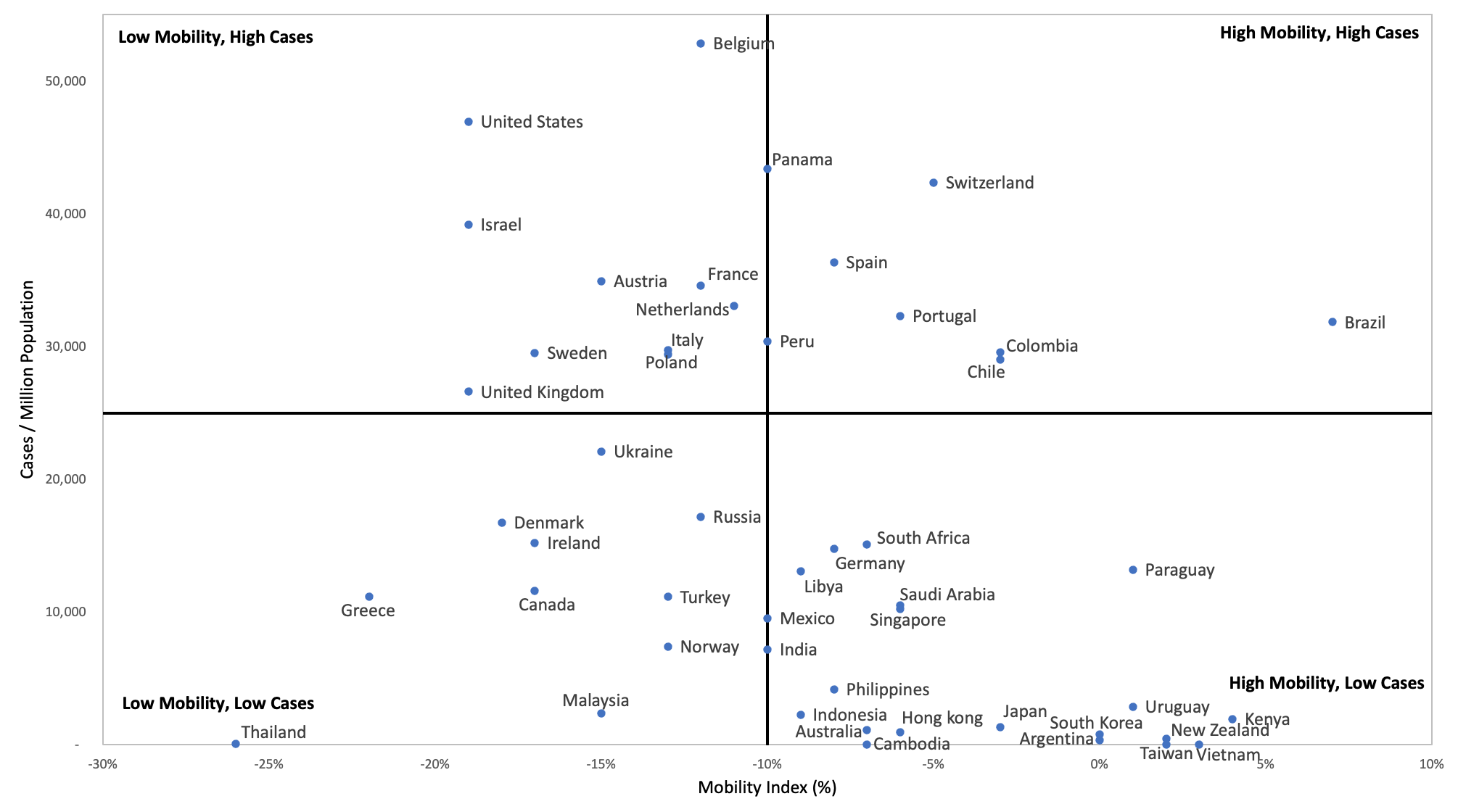
Mobility index compared to COVID cases/1M population

This graph compares the mobility index with the number of COVID cases/million population. The number of cases/million people is the number of people infected with COVID-19 for every million people in the population. The higher the number, the more COVID cases the country was seeing per capita.

Top left quadrant shows that countries like Israel and the U.S.A, with strict lockdown measures, still had a high number of relative COVID cases. Top right quadrant shows that Brazil and Chile had a high mobility index and as expected, a high number of cases. More movement = more transmission.

Bottom left quadrant shows the countries that maintained a lockdown and were able to keep their COVID cases relatively low. These countries included Thailand and Greece.

Bottom right quadrant shows the countries that were not under strict lockdown and had low cases. New Zealand, Taiwan and Vietnam were able to maintain a low case number despite not being locked down.


According to the data shown on the graph, mobility had no correlation to the number of cases. In fact, the opposite is seen. More lockdown = more cases. This is likely due to lockdown measures being taken as a reactive measure to rising cases. When cases are on the rise, policymakers take actions to restrict movements to halt the spread of COVID.

The top 10% of countries with highest mobility saw an average of 6,843 cases/1M people. The bottom 10% of countries with lowest mobility saw an average of 24,784 cases/1M people.

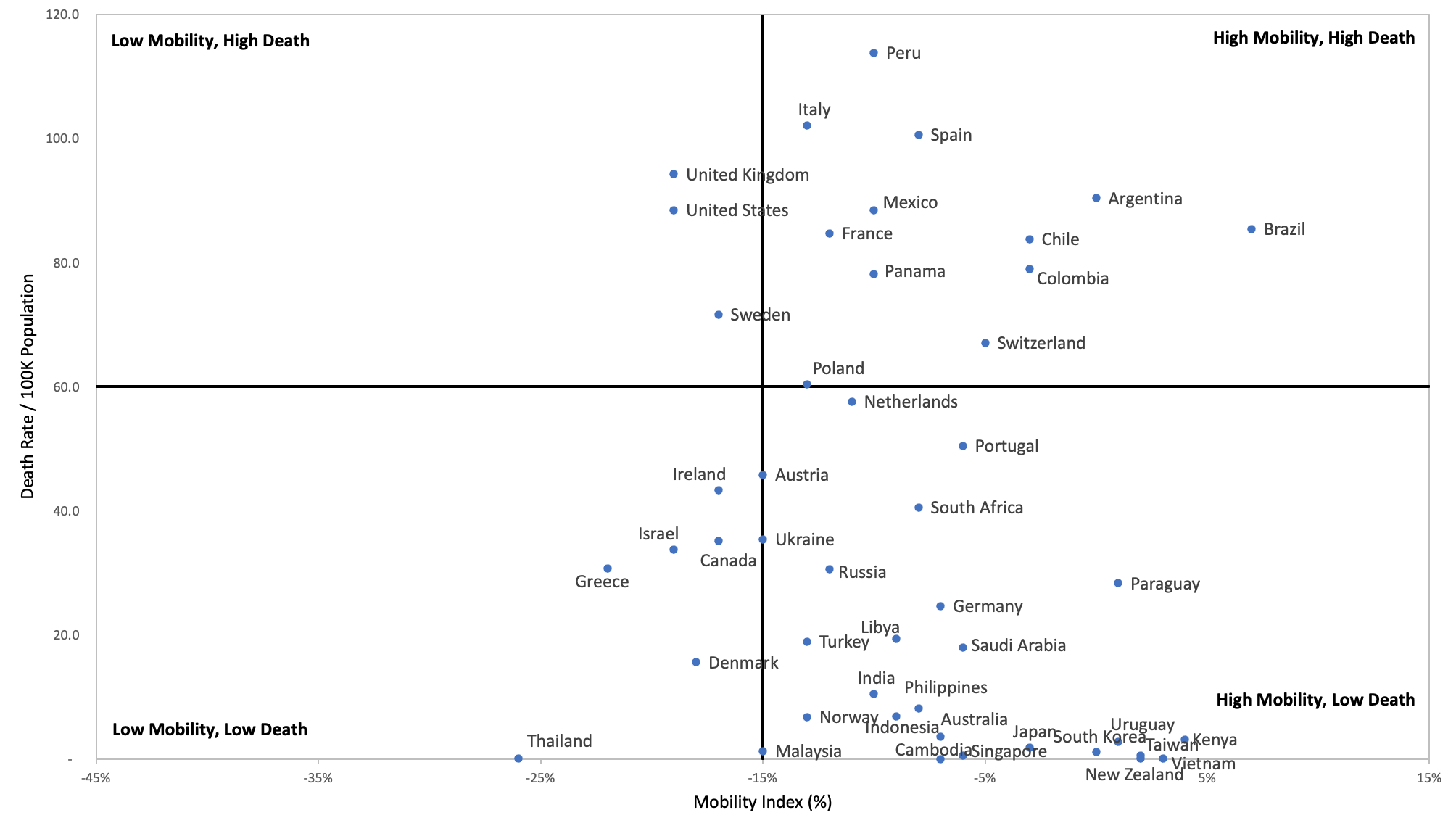
Mobility index compared to COVID death rate / 100K population

This graph compares the mobility index with the death rate/100K population. The death rate/100K population is the number of people that died for every 100,000 people in the population.

Top left quadrant shows that the U.S.A and U.K. had a high death rate despite being under lockdown (low mobility). Top right quadrant shows that were not under strict lockdown and had a high death rate.

Bottom left quadrant shows the countries that maintained a low death rate while under lockdown (ie. Thailand, Denmark).


Bottom right quadrant shows the countries that were able to maintain a low death rate despite not being under strict lockdown (ie. New Zealand, South Korea, Taiwan, Vietnam).


Like the number of cases, countries with stricter lockdown measures have higher death rates than countries with fewer restrictions. This is another metric that is greatly impacted by the reactive policies to rising cases.

The data shows that the top 10% of countries with the highest mobility saw an average of 27 deaths/100K population. The bottom 10% of countries with the lowest mobility saw an average of 49 deaths/100K population.

Data Limitations

The data in the matrices above is a helpful visual representation of the general impacts that lockdown has on health and the economy. It shows how different countries who locked down compare to those that didn’t. However, there are limitations to the data:

  1. Google’s mobility is tracking the movement in places classified as “workplace” and “residential”. This does not take into account retail, transit stations, parks. So not the most accurate measurement of mobility.
  2. Google’s Mobility index is a dynamic metric that changes frequently. Countries are shifting between lockdown and no lockdown, which in turn effects their Mobility index.
  3. GDP/unemployment are not perfect measures of economic output.
  4. Cases/deaths are generally seen as reactive metrics that countries use to make policies. Many countries went into lockdown only after seeing cases spike.

Overall, the above data shows that enforcing lockdown policies has a negative economic impact on GDP, but not unemployment. The impact on health is not as conclusive, mostly because cases & deaths are not an accurate measure. This is due to countries enforcing lockdowns to halt the spread of COVID after an outbreak.

The follow-up article will analyze the effectiveness of lockdowns on halting the spread of COVID.

Telemedicine in Amazon’s Future After Entry In Prescription Delivery Service?

Telemedicine in Amazon’s Future After Entry In Prescription Delivery Service?

Is Telemedicine in Amazon’s Future After Entry into Prescription Delivery Service?

December 2nd, 2020

  • Amazon makes a $753 million acquisition of online pharmacy delivery service and launches Amazon Pharmacy
  • They provide patients with prescriptions at their doorstep within days and pharmacists around the clock for any questions
  • Next step should be the addition of virtual care services so that Amazon website can become a one-stop shop

In June 2018, Amazon (AMZN) announced a $750 million purchase of online pharmacy delivery service, PillPack.

PillPack has now been changed to Amazon Pharmacy, where patients can upload a prescription from their doctor and Amazon will deliver it to their front door in as quickly as two days.

With the prescription drug market growing in value every year and the need for remote healthcare now more than ever, the global online pharmacy market is looking to grow to >$130 billion by 2025. Although Amazon Pharmacy is currently restricted to the US, the demand and growth in revenue give it the possibility to expand worldwide.

The emergence of the coronavirus at the start of this year lead to an exponential increase in the use of telemedicine. Read LifeScite’s COVID Kickstarted Telemedicine Adoption With 4,000% Growth for more information on telemedicine and the role it has played during the pandemic.

What Does Amazon’s Interest Mean for Telemedicine?

Two telemedicine companies, Teladoc (TDOC) and Livongo (LVGO), announced the completion of their merger at the end of October. Their main focus is to deliver virtual care that is widely available and provides patients with the care they need for a multitude of clinical specialties.

The company claims the use of telemedicine is already on the rise and expected to grow every year. They claim that >$250 billion of current healthcare expenditure in the US can be virtualized and that their company will be able to provide this care.

Combined, Teladoc & Livongo want to digitalize the doctor’s visit. They even use an example of how together they can deliver whole-person care to a patient with hypertension from start to finish (see image below). Both companies provide help along different steps of the journey (ie. Teladoc-purple and Livongo-blue) however, they work together and even overlap to provide the patient with the best care.

They deliver virtual visits with healthcare professionals who consult the patient’s medical history and lab results and set out a plan towards wellness. They will also be able to deliver any necessary equipment right to the patient’s door and can monitor any changes through their Livongo Health Nudges app. Physicians can also write a prescription and have it delivered to the patient. This multifaceted way of providing care not only leads to better health outcomes for the patient, but also lowers the medical costs as well.

Now that Amazon, the most valuable public company in the world, is expanding into the healthcare sector, it is validating the telemedicine space. They already have pharmacists around the clock ready to answer any questions. They even deliver prescriptions provided by a patient’s regular doctor within a few days. Amazon’s next logical step could be to provide the virtual care services that companies like Teladoc and Livongo already deliver to their patients. Afterall, this is a $120B+ addressable market for Amazon. The one-stop shop has been Amazon’s motto in parallel fields such as grocery, with the Whole Foods acquisition.

Amazon’s Other Acquisitions Indicate There Is More To Follow in Telemedicine

While Amazon has maintained its status as the largest company for product sales, they have also expanded to services as well. The $13B acquisition of Whole Foods was mostly used to study the in-store grocery consumer mindset and use that knowledge to convert them into an online consumer. Their goal was to extend their delivery service into the food sector as well.

In line with this idea was the launch of Amazon Go and Amazon Go Grocery. Amazon has set up their own convenience and groceries stores around the US. Members scan their membership at the front of the store and can shop freely. No need to wait in line to check out, the app automatically updates the bill as you shop. You walk into the store, grab what you need and walk out. The charge is updated to your Amazon account. Watch a video of Amazon Go Grocery here.

It doesn’t stop there. Amazon also provides music and video streaming services like Amazon Music and Prime Video. They also have Amazon Home and Business Services where customers can contract verified professionals for home services. This service business was an attempt to compete with Angie’s List and Yelp. 

As we can see, Amazon is en route to doing it all. They have conquered the delivery space and moved into grocery, web and home services as well. They have already started working into the healthcare space. All that’s left is providing patients with virtual care from physicians.

Amazon as a future competitor to Teladoc & Livongo remains to be seen. For the time being, investors are glad to have Amazon lend validation to moving healthcare digital.

Aging Expert Dr. Alex Zhavoronkov Discusses Future of The Longevity Space

Aging Expert Dr. Alex Zhavoronkov Discusses Future of The Longevity Space

Aging Expert Dr. Alex Zhavoronkov Discusses Future of the Longevity Space

November 27th, 2020

LifeScite interviewed Dr. Alex Zhavoronkov to get his insights on the aging field, its most recent developments and upcoming ventures. Aging is a relatively new research field that focuses on identifying the multitude of factors that contribute to a persons decline and intervening in the hopes of extending longevity.

To learn more about aging and longevity, read our article about the field HERE. 

Transcript of the interview. 

LifeScite: Today we have Dr. Alex Zhavoronkov here to share his insights on the current state of longevity medicine and the next wave of aging research strategies. Dr. Zhavoronkov is the CEO of Insilico Medicine, which is a company that’s using artificial intelligence, for drug discovery and aging research. He is also one of the leading longevity experts cited in over 130 papers and has published two books. Thank you for joining us Dr. Zhavoronkov.

Dr. Zhavoronkov: Thank you for having me.

LifeScite: Can you give our listeners a quick overview of the longevity and aging field.

Dr. Zhavoronkov: It will be difficult to make a short intro into the longevity industry because it is broad and encompasses many fields that also relate to general biotechnology, pharmaceutical and healthcare.

I would define longevity medicine as a field of AI powered preventative medicine focused on biomarkers of aging. Recently, the longevity industry has advanced quite dramatically. Just in the last ten years, we have seen convergences that integrate soft sciences like information technology with biotechnology. This union resulted in the discovery and rapid adoption of a technology called aging clocks or biomarkers of aging.

Aging clocks were originally developed on methylation data, so epigenetic data by Steven Horvath and the Hannam group from 2011-2013. Our group picked up the trend and converged it with artificial intelligence and developed a range of deep biomarkers of aging or deep aging clocks.

We have a variety of aging clocks built on blood tests, transcriptomic data, proteomic data, methylation data and aging data. Pretty much any data that changes in time. This allows us to tangibly measure aging. I believe that this introduction will be the next-generation of the longevity industry.

LifeScite: How about the therapeutic side? What are some drug candidates targeting aging?

Dr. Zhavoronkov: I like to break therapeutics down into 5 areas.

  1. Rapalogues, derivatives or analogues of rapamycin. This was an old drug used in transplantation, in cancer and in immunology. While it sounds scary because of the severity and toxicity of those diseases, rapamycin is rather mild and many rapalogues have substantial promise in aging and multiple age-related diseases.
  2. These are drugs that target senescent (old) cells and allow for cells to be replenished, to be recycled. So, think of it as a universal recycling method that does not allow the old cells to stay and pollute the microenvironment. There are multiple approaches to this kind of challenge of recycling and there are multiple senolytic companies that are emerging. Recently, there was a paper in Nature Biotechnology on senolytics called, “Send in the Senolytics”.
  3. NAD boosters. Multiple groups worldwide discovered that elevating the level of NAD+ molecule at the cellular level results in increases in health and lifespan in model organisms. Now there are experiments on the way in humans and molecules like nicotinaminde riboside or nicotinamine nucleotide are actively now consumed as supplements but also are used in clinical trials.
  4. This is an old diabetic and pre-diabetic drug and now people of all ages are also taking it for longevity. There is a clinical trial on the way called TAME that targets aging.
  5. Alpha-ketogluterate (or AKG). This includes work out of the Buck Institute and several other top research facilities. AKG is off patent and thus difficult to get IP protection, similar to many of those molecules like nicotinaminde riboside or nicotinamine nucleotide. It looks like it holds a lot of promise in aging and age-related diseases as well.

LifeScite: In addition to the five promising pharmaceutical areas you mention, there is also increasing interest in the field of regenerative medicine. How do you see this contributing to longevity?

The main drivers of regenerative medicine are stem cells, organ transplants and endogenous regeneration. Aside from the consumer application of stem cells, primarily in China, we do not see large companies getting into the stem cell therapeutics field. It is still at the early research stage, even thirty years after the first treatment with stem cells. I am hoping the next decade will yield dramatic advances in regenerative medicine and stem cell therapy.

There is also gene therapy that is at the early research level. We will not see dramatic clinical advances in gene therapy for aging for the foreseeable future. I would say maybe ten years.

LifeScite: You mention that some of the areas in aging are in the early research stages. What are your expectations for the aging field in the next decade?

We are starting to see companies and even clinical centres combining diagnostics and therapeutics. Unfortunately, we do not see this industry being perceived as credible by the insurance industry and by large pharmaceutic industries, yet at least. We’re getting there but we still have a long way to go.

I think that in general, the longevity industry is pretty early in its development, so we don’t see the hype in longevity yet. We do see the venture capital industry getting into the field, so early stage venture capital companies are getting in. There is an emergence of those companies. They are funding all kinds of projects, credible and uncredible and its great. This investment reminds me of the social networking era, or the era of computing where people were betting on all kinds of projects during the dotcom boom.

I think that we are going to see a major boom in aging within the next decade or two. So, if you are a young pharmaceutical executive or if you are a medical student, I would take this industry as a priority for career development. On this front, we just recently launched a course called Longevity Medicine. This is an introduction to longevity medicine for physicians. It’s available at www.longevity-medicine.org and you can take it via Udacity or LabXchange or other platforms.

We are going to be putting more and more courses for people to get into this industry, for both physicians, general public and even investors. You will be able to take it as a continuing program to improve your skills.

Large tech companies are getting into the field and are on the borderline of longevity and digital medicine so all those apps and trackers that track you in time, measure very useful data that we can use for longevity research. But I haven’t seen anyone openly coming out and saying, “we are going to use this to extend human life.” Except for our company, Deep Longevity, which is very actively involved in this biomarker development process and of course we are very vocal about the focus of the company.

LifeScite: Up until now, drug development has been on treating age-related diseases. How do you and your company, and other companies in the field go about preventing age specifically. Some may argue that you’re fighting Mother Nature.

Dr. Zhavoronkov: Nature is not your friend on a personal, or even species level. It wants you to come into this world, reproduce and then die. It wants you to compete for survival, not necessarily improve. So, we are not fighting Mother Mature, we are improving it because nature is imperfect. We need to find design flaws and try to fix them, or completely rewrite them. Unfortunately, it’s not easy, so we are trying to do it in a very credible way.

In our company, we are not trying to diagnose diseases. Rather, we are trying to develop biomarkers that tangibly track age. You can actually think of aging as a disease with hundreds of stages. With artificial intelligence and more advanced statistical tools, we can tangibly track the progression from one stage to the other and rank them by importance. We can see which most important features are causal in aging and try to intervene. Essentially, we can understand the symphony of aging and try to direct it.

That’s what we’re doing at Insilico. We are developing a variety of interventions that are comprised of something that’s already available, you like eating well, sleeping adequately and exercising. We can now work with those lifestyle behaviours and optimize them for longevity.

We can also start incorporating some of those advances that I mentioned, into more clinical regimens. However, it’s not easy to conduct a clinical study for aging. Unfortunately, you have to go after some disease to be able to make a business case. With some of the very advanced pharmaceutical companies, we are working on protocols for clinical trial enrollment using aging clocks.

LifeScite: Aging clocks are a relatively new concept that have been helping in longevity research and aging in general. Is the data being used to compile aging clocks accessible to the average person? If so, how can somebody access such information?

Dr. Zhavoronkov: It’s now very accessible to use due to an app launched by Deep Longevity, called Young.AI. You can log in a substantial amount of anonymous information about yourself and it will turn it into clocks. You can also upload a variety of data types for your age to be predicted and for the aging clocks to be interpreted.

LifeScite: This past August, a well-known longevity company called Unity saw that its lead drug candidate failed. How do you think this affected the longevity industry? And what do you think other companies learned from this hiccup?

Dr. Zhavoronkov: I think the experts in the field and the pharmaceutical companies, this failure did not really make a difference. If you are in big pharma, you know that more trials fails than succeed. In phase 2, you usually have a 70% failure rate.

Second, it’s the first trials of its kind, so the company needed to choose a disease indication that is relevant to their treatment. It’s not necessarily the best choice of disease because the intervention they chose is hard to track. I don’t think that the target they chose is right. I don’t think that the trial was perfect. However, I do think the company deserves a second, even a third chance.

On the surface, for uneducated investors and industry outsiders, it’s very negative. I think that the most negative was another failure by a company called ResTORbio where they used a PI3K inhibitor and their phase 3 trial failed. That probably affected the industry more than sinolytics.

LifeScite: Recently, your company, Insilico, signed two collaborations with pharma companies Taisho and Jansen of Johnson and Johnson. How do you view these collaborations and are they a sign that big pharma is expressing more interest in the field?

Dr. Zhavoronkov: Insilico itself is more of an AI company focused on drug discovery. It does tend to support companies and age-related diseases in areas that are associated with aging. We specifically spun out Deep Longevity out of Insilico to be focused on aging without investors and pharma companies. Some of them don’t want to partner with an aging company or don’t support the longevity industry because it is still a fresh and unproven field. So, the partnership with JnJ doesn’t have anything to do with aging.

Taisho Pharmaceutical has everything to do with aging because we are tasked to both discover novel targets for senescence and also produce novel molecules for senescence. Taisho is big business. It’s a moderately big company, top 100 in the world. Of course, this partnership is worth more than you can think of, in terms of potential for humanity. If it works, it’s going to be huge.

LifeScite: With this collaboration, specifically for your company, or the aging field in general, what do you expect to see in the next 3-5 years?

Dr. Zhavoronkov: For Insilico, I think that we are going to see some of our molecules going into clinical trials within the next 3 years. Specifically going into clinical trials for an age associated condition. We are looking for fibrosis and several others.

For Deep Longevity, we are already supporting the longevity industry in a big way. We launched the apps, the set of tools to track aging and we developed several artificial intelligence systems.  They help identify those features that make you look older or younger to the digital network and intervene. We are tangibly going after age reversal.

LifeScite: I learned that you function on about 3 to 4 hours of sleep a night. How do you supplement that lack of sleep? How is it that you stay sharp and healthy even with a fraction of the recommended sleep hours?

Dr. Zhavoronkov: That is definitely not very healthy, and I wouldn’t recommend it for anybody. But, I must say that I feel I am contributing to the field and every time I go to sleep, I feel that I am wasting time. Every second of the time that you are awake, somebody dies of aging.

In general, it’s also a huge economic problem so if we don’t figure out a way to significantly extend protective longevity, the economy is going to collapse and a lot of people are going to die.

So, what else is there to do? We need to accelerate and I’m just very dedicated to the field. I wish more people were doing that because you can convert time into money, but you cannot convert money into time.

We as human beings are very good at finding some kind of objective function to start maximizing towards a specific objective. In life, we optimize for money to give us some arbitrary measure but at the end of the day, there is nothing more important than time. Healthy time. We cannot really add that, at least not yet.

Would I trade places with Warren Buffet or some other people who have lots of money over more years to live? Even though they are incredibly wealthy, I don’t think so.

I think that the best strategy right now is to just work as much as possible to get this field off the ground. If you look at what’s happening in the field, there are not that many people who are trying to get it to the consumer and also to accelerate the research. In academia, people are trying to publish papers and are still working on diet and exercise so there is no sense of urgency there. In business, people are very skeptical its going to work.

Think of it as electric cars before Musk. If there are no Musks, you won’t have the industry. At the end of the day, you realize you have to work very hard to create this industry. There are a few of us there but there are not many.

LifeScite: Your dedication and your sacrifices are very much appreciated.

Dr. Zhavoronkov: I’m not sacrificing anything. I’m just optimizing. I’m actually very happy doing what I’m doing. I don’t think that there is anything better to do. I don’t need to sacrifice for something that I deeply love.

LifeScite: Thank you Dr. Zhavoronkov for all your insight and your knowledge. I really appreciate you taking the time to be here.

Dr. Zhavoronkov: Thank you and let’s promote longevity research in general. It’s great that you are doing it towards pharma. Those are the guys we need to play the big game.