Select Page
Telemedicine in Amazon’s Future After Entry In Prescription Delivery Service?

Telemedicine in Amazon’s Future After Entry In Prescription Delivery Service?

Is Telemedicine in Amazon’s Future After Entry into Prescription Delivery Service?

December 2nd, 2020

  • Amazon makes a $753 million acquisition of online pharmacy delivery service and launches Amazon Pharmacy
  • They provide patients with prescriptions at their doorstep within days and pharmacists around the clock for any questions
  • Next step should be the addition of virtual care services so that Amazon website can become a one-stop shop

In June 2018, Amazon (AMZN) announced a $750 million purchase of online pharmacy delivery service, PillPack.

PillPack has now been changed to Amazon Pharmacy, where patients can upload a prescription from their doctor and Amazon will deliver it to their front door in as quickly as two days.

With the prescription drug market growing in value every year and the need for remote healthcare now more than ever, the global online pharmacy market is looking to grow to >$130 billion by 2025. Although Amazon Pharmacy is currently restricted to the US, the demand and growth in revenue give it the possibility to expand worldwide.

The emergence of the coronavirus at the start of this year lead to an exponential increase in the use of telemedicine. Read LifeScite’s COVID Kickstarted Telemedicine Adoption With 4,000% Growth for more information on telemedicine and the role it has played during the pandemic.

What Does Amazon’s Interest Mean for Telemedicine?

Two telemedicine companies, Teladoc (TDOC) and Livongo (LVGO), announced the completion of their merger at the end of October. Their main focus is to deliver virtual care that is widely available and provides patients with the care they need for a multitude of clinical specialties.

The company claims the use of telemedicine is already on the rise and expected to grow every year. They claim that >$250 billion of current healthcare expenditure in the US can be virtualized and that their company will be able to provide this care.

Combined, Teladoc & Livongo want to digitalize the doctor’s visit. They even use an example of how together they can deliver whole-person care to a patient with hypertension from start to finish (see image below). Both companies provide help along different steps of the journey (ie. Teladoc-purple and Livongo-blue) however, they work together and even overlap to provide the patient with the best care.

They deliver virtual visits with healthcare professionals who consult the patient’s medical history and lab results and set out a plan towards wellness. They will also be able to deliver any necessary equipment right to the patient’s door and can monitor any changes through their Livongo Health Nudges app. Physicians can also write a prescription and have it delivered to the patient. This multifaceted way of providing care not only leads to better health outcomes for the patient, but also lowers the medical costs as well.

Now that Amazon, the most valuable public company in the world, is expanding into the healthcare sector, it is validating the telemedicine space. They already have pharmacists around the clock ready to answer any questions. They even deliver prescriptions provided by a patient’s regular doctor within a few days. Amazon’s next logical step could be to provide the virtual care services that companies like Teladoc and Livongo already deliver to their patients. Afterall, this is a $120B+ addressable market for Amazon. The one-stop shop has been Amazon’s motto in parallel fields such as grocery, with the Whole Foods acquisition.

Amazon’s Other Acquisitions Indicate There Is More To Follow in Telemedicine

While Amazon has maintained its status as the largest company for product sales, they have also expanded to services as well. The $13B acquisition of Whole Foods was mostly used to study the in-store grocery consumer mindset and use that knowledge to convert them into an online consumer. Their goal was to extend their delivery service into the food sector as well.

In line with this idea was the launch of Amazon Go and Amazon Go Grocery. Amazon has set up their own convenience and groceries stores around the US. Members scan their membership at the front of the store and can shop freely. No need to wait in line to check out, the app automatically updates the bill as you shop. You walk into the store, grab what you need and walk out. The charge is updated to your Amazon account. Watch a video of Amazon Go Grocery here.

It doesn’t stop there. Amazon also provides music and video streaming services like Amazon Music and Prime Video. They also have Amazon Home and Business Services where customers can contract verified professionals for home services. This service business was an attempt to compete with Angie’s List and Yelp. 

As we can see, Amazon is en route to doing it all. They have conquered the delivery space and moved into grocery, web and home services as well. They have already started working into the healthcare space. All that’s left is providing patients with virtual care from physicians.

Amazon as a future competitor to Teladoc & Livongo remains to be seen. For the time being, investors are glad to have Amazon lend validation to moving healthcare digital.

Aging Expert Dr. Alex Zhavoronkov Discusses Future of The Longevity Space

Aging Expert Dr. Alex Zhavoronkov Discusses Future of The Longevity Space

Aging Expert Dr. Alex Zhavoronkov Discusses Future of the Longevity Space

November 27th, 2020

LifeScite interviewed Dr. Alex Zhavoronkov to get his insights on the aging field, its most recent developments and upcoming ventures. Aging is a relatively new research field that focuses on identifying the multitude of factors that contribute to a persons decline and intervening in the hopes of extending longevity.

To learn more about aging and longevity, read our article about the field HERE. 

Transcript of the interview. 

LifeScite: Today we have Dr. Alex Zhavoronkov here to share his insights on the current state of longevity medicine and the next wave of aging research strategies. Dr. Zhavoronkov is the CEO of Insilico Medicine, which is a company that’s using artificial intelligence, for drug discovery and aging research. He is also one of the leading longevity experts cited in over 130 papers and has published two books. Thank you for joining us Dr. Zhavoronkov.

Dr. Zhavoronkov: Thank you for having me.

LifeScite: Can you give our listeners a quick overview of the longevity and aging field.

Dr. Zhavoronkov: It will be difficult to make a short intro into the longevity industry because it is broad and encompasses many fields that also relate to general biotechnology, pharmaceutical and healthcare.

I would define longevity medicine as a field of AI powered preventative medicine focused on biomarkers of aging. Recently, the longevity industry has advanced quite dramatically. Just in the last ten years, we have seen convergences that integrate soft sciences like information technology with biotechnology. This union resulted in the discovery and rapid adoption of a technology called aging clocks or biomarkers of aging.

Aging clocks were originally developed on methylation data, so epigenetic data by Steven Horvath and the Hannam group from 2011-2013. Our group picked up the trend and converged it with artificial intelligence and developed a range of deep biomarkers of aging or deep aging clocks.

We have a variety of aging clocks built on blood tests, transcriptomic data, proteomic data, methylation data and aging data. Pretty much any data that changes in time. This allows us to tangibly measure aging. I believe that this introduction will be the next-generation of the longevity industry.

LifeScite: How about the therapeutic side? What are some drug candidates targeting aging?

Dr. Zhavoronkov: I like to break therapeutics down into 5 areas.

  1. Rapalogues, derivatives or analogues of rapamycin. This was an old drug used in transplantation, in cancer and in immunology. While it sounds scary because of the severity and toxicity of those diseases, rapamycin is rather mild and many rapalogues have substantial promise in aging and multiple age-related diseases.
  2. These are drugs that target senescent (old) cells and allow for cells to be replenished, to be recycled. So, think of it as a universal recycling method that does not allow the old cells to stay and pollute the microenvironment. There are multiple approaches to this kind of challenge of recycling and there are multiple senolytic companies that are emerging. Recently, there was a paper in Nature Biotechnology on senolytics called, “Send in the Senolytics”.
  3. NAD boosters. Multiple groups worldwide discovered that elevating the level of NAD+ molecule at the cellular level results in increases in health and lifespan in model organisms. Now there are experiments on the way in humans and molecules like nicotinaminde riboside or nicotinamine nucleotide are actively now consumed as supplements but also are used in clinical trials.
  4. This is an old diabetic and pre-diabetic drug and now people of all ages are also taking it for longevity. There is a clinical trial on the way called TAME that targets aging.
  5. Alpha-ketogluterate (or AKG). This includes work out of the Buck Institute and several other top research facilities. AKG is off patent and thus difficult to get IP protection, similar to many of those molecules like nicotinaminde riboside or nicotinamine nucleotide. It looks like it holds a lot of promise in aging and age-related diseases as well.

LifeScite: In addition to the five promising pharmaceutical areas you mention, there is also increasing interest in the field of regenerative medicine. How do you see this contributing to longevity?

The main drivers of regenerative medicine are stem cells, organ transplants and endogenous regeneration. Aside from the consumer application of stem cells, primarily in China, we do not see large companies getting into the stem cell therapeutics field. It is still at the early research stage, even thirty years after the first treatment with stem cells. I am hoping the next decade will yield dramatic advances in regenerative medicine and stem cell therapy.

There is also gene therapy that is at the early research level. We will not see dramatic clinical advances in gene therapy for aging for the foreseeable future. I would say maybe ten years.

LifeScite: You mention that some of the areas in aging are in the early research stages. What are your expectations for the aging field in the next decade?

We are starting to see companies and even clinical centres combining diagnostics and therapeutics. Unfortunately, we do not see this industry being perceived as credible by the insurance industry and by large pharmaceutic industries, yet at least. We’re getting there but we still have a long way to go.

I think that in general, the longevity industry is pretty early in its development, so we don’t see the hype in longevity yet. We do see the venture capital industry getting into the field, so early stage venture capital companies are getting in. There is an emergence of those companies. They are funding all kinds of projects, credible and uncredible and its great. This investment reminds me of the social networking era, or the era of computing where people were betting on all kinds of projects during the dotcom boom.

I think that we are going to see a major boom in aging within the next decade or two. So, if you are a young pharmaceutical executive or if you are a medical student, I would take this industry as a priority for career development. On this front, we just recently launched a course called Longevity Medicine. This is an introduction to longevity medicine for physicians. It’s available at www.longevity-medicine.org and you can take it via Udacity or LabXchange or other platforms.

We are going to be putting more and more courses for people to get into this industry, for both physicians, general public and even investors. You will be able to take it as a continuing program to improve your skills.

Large tech companies are getting into the field and are on the borderline of longevity and digital medicine so all those apps and trackers that track you in time, measure very useful data that we can use for longevity research. But I haven’t seen anyone openly coming out and saying, “we are going to use this to extend human life.” Except for our company, Deep Longevity, which is very actively involved in this biomarker development process and of course we are very vocal about the focus of the company.

LifeScite: Up until now, drug development has been on treating age-related diseases. How do you and your company, and other companies in the field go about preventing age specifically. Some may argue that you’re fighting Mother Nature.

Dr. Zhavoronkov: Nature is not your friend on a personal, or even species level. It wants you to come into this world, reproduce and then die. It wants you to compete for survival, not necessarily improve. So, we are not fighting Mother Mature, we are improving it because nature is imperfect. We need to find design flaws and try to fix them, or completely rewrite them. Unfortunately, it’s not easy, so we are trying to do it in a very credible way.

In our company, we are not trying to diagnose diseases. Rather, we are trying to develop biomarkers that tangibly track age. You can actually think of aging as a disease with hundreds of stages. With artificial intelligence and more advanced statistical tools, we can tangibly track the progression from one stage to the other and rank them by importance. We can see which most important features are causal in aging and try to intervene. Essentially, we can understand the symphony of aging and try to direct it.

That’s what we’re doing at Insilico. We are developing a variety of interventions that are comprised of something that’s already available, you like eating well, sleeping adequately and exercising. We can now work with those lifestyle behaviours and optimize them for longevity.

We can also start incorporating some of those advances that I mentioned, into more clinical regimens. However, it’s not easy to conduct a clinical study for aging. Unfortunately, you have to go after some disease to be able to make a business case. With some of the very advanced pharmaceutical companies, we are working on protocols for clinical trial enrollment using aging clocks.

LifeScite: Aging clocks are a relatively new concept that have been helping in longevity research and aging in general. Is the data being used to compile aging clocks accessible to the average person? If so, how can somebody access such information?

Dr. Zhavoronkov: It’s now very accessible to use due to an app launched by Deep Longevity, called Young.AI. You can log in a substantial amount of anonymous information about yourself and it will turn it into clocks. You can also upload a variety of data types for your age to be predicted and for the aging clocks to be interpreted.

LifeScite: This past August, a well-known longevity company called Unity saw that its lead drug candidate failed. How do you think this affected the longevity industry? And what do you think other companies learned from this hiccup?

Dr. Zhavoronkov: I think the experts in the field and the pharmaceutical companies, this failure did not really make a difference. If you are in big pharma, you know that more trials fails than succeed. In phase 2, you usually have a 70% failure rate.

Second, it’s the first trials of its kind, so the company needed to choose a disease indication that is relevant to their treatment. It’s not necessarily the best choice of disease because the intervention they chose is hard to track. I don’t think that the target they chose is right. I don’t think that the trial was perfect. However, I do think the company deserves a second, even a third chance.

On the surface, for uneducated investors and industry outsiders, it’s very negative. I think that the most negative was another failure by a company called ResTORbio where they used a PI3K inhibitor and their phase 3 trial failed. That probably affected the industry more than sinolytics.

LifeScite: Recently, your company, Insilico, signed two collaborations with pharma companies Taisho and Jansen of Johnson and Johnson. How do you view these collaborations and are they a sign that big pharma is expressing more interest in the field?

Dr. Zhavoronkov: Insilico itself is more of an AI company focused on drug discovery. It does tend to support companies and age-related diseases in areas that are associated with aging. We specifically spun out Deep Longevity out of Insilico to be focused on aging without investors and pharma companies. Some of them don’t want to partner with an aging company or don’t support the longevity industry because it is still a fresh and unproven field. So, the partnership with JnJ doesn’t have anything to do with aging.

Taisho Pharmaceutical has everything to do with aging because we are tasked to both discover novel targets for senescence and also produce novel molecules for senescence. Taisho is big business. It’s a moderately big company, top 100 in the world. Of course, this partnership is worth more than you can think of, in terms of potential for humanity. If it works, it’s going to be huge.

LifeScite: With this collaboration, specifically for your company, or the aging field in general, what do you expect to see in the next 3-5 years?

Dr. Zhavoronkov: For Insilico, I think that we are going to see some of our molecules going into clinical trials within the next 3 years. Specifically going into clinical trials for an age associated condition. We are looking for fibrosis and several others.

For Deep Longevity, we are already supporting the longevity industry in a big way. We launched the apps, the set of tools to track aging and we developed several artificial intelligence systems.  They help identify those features that make you look older or younger to the digital network and intervene. We are tangibly going after age reversal.

LifeScite: I learned that you function on about 3 to 4 hours of sleep a night. How do you supplement that lack of sleep? How is it that you stay sharp and healthy even with a fraction of the recommended sleep hours?

Dr. Zhavoronkov: That is definitely not very healthy, and I wouldn’t recommend it for anybody. But, I must say that I feel I am contributing to the field and every time I go to sleep, I feel that I am wasting time. Every second of the time that you are awake, somebody dies of aging.

In general, it’s also a huge economic problem so if we don’t figure out a way to significantly extend protective longevity, the economy is going to collapse and a lot of people are going to die.

So, what else is there to do? We need to accelerate and I’m just very dedicated to the field. I wish more people were doing that because you can convert time into money, but you cannot convert money into time.

We as human beings are very good at finding some kind of objective function to start maximizing towards a specific objective. In life, we optimize for money to give us some arbitrary measure but at the end of the day, there is nothing more important than time. Healthy time. We cannot really add that, at least not yet.

Would I trade places with Warren Buffet or some other people who have lots of money over more years to live? Even though they are incredibly wealthy, I don’t think so.

I think that the best strategy right now is to just work as much as possible to get this field off the ground. If you look at what’s happening in the field, there are not that many people who are trying to get it to the consumer and also to accelerate the research. In academia, people are trying to publish papers and are still working on diet and exercise so there is no sense of urgency there. In business, people are very skeptical its going to work.

Think of it as electric cars before Musk. If there are no Musks, you won’t have the industry. At the end of the day, you realize you have to work very hard to create this industry. There are a few of us there but there are not many.

LifeScite: Your dedication and your sacrifices are very much appreciated.

Dr. Zhavoronkov: I’m not sacrificing anything. I’m just optimizing. I’m actually very happy doing what I’m doing. I don’t think that there is anything better to do. I don’t need to sacrifice for something that I deeply love.

LifeScite: Thank you Dr. Zhavoronkov for all your insight and your knowledge. I really appreciate you taking the time to be here.

Dr. Zhavoronkov: Thank you and let’s promote longevity research in general. It’s great that you are doing it towards pharma. Those are the guys we need to play the big game.

Moderna and Pfizer Challenge the Status Quo with New mRNA Vaccine Approach

Moderna and Pfizer Challenge the Status Quo with New mRNA Vaccine Approach

Moderna and Pfizer Challenge the Status Quo with New mRNA Vaccine Approach

November 23, 2020 

  • Until now, the majority of vaccines have been developed using a conventional method of stimulating the body’s immune response
  • Moderna and Pfizer are the first to use mRNA technology to develop a vaccine against COVID
  • Both companies have shown >95% efficacy for their vaccine candidates in phase 3, with trials still ongoing

Things are finally starting to look up as biotechnology company, Moderna, found a 94.5% efficacy of their vaccine candidate against COVID. The phase 3 trial of mRNA-1273 is still ongoing but the company plans to file for Emergency Use Authorization (EUA) in the USA. Pharmaceutical company, Pfizer, also came out with data regarding their drug candidate and similarly found >95% efficacy.

Both companies are the first to use mRNA technology to develop a COVID vaccines, whereas traditional ones use weakened or inactive forms of the disease. While vaccines in the past have taken years to develop, Moderna and Pfizer were able to do so within months. The question is whether their success can be chalked up to this new technology?

Vaccine Technologies Have Remained Unchanged Until Now

The body itself acts as a particularly good defense against most pathogens. Physical barriers like skin and mucous membranes physically protect against germs entering the body. However, in the event that a pathogen does enter, the body’s immune system is triggered and attacks. Parts of the pathogen, called antigens, are recognized by the immune system as foreign, and lead to the production of antibodies.

In the event that the pathogen is encountered again, the body has already developed memory antibodies. They recognize and remember the pathogen and are thus able to mount an immune response that is even quicker and stronger than the first (memory response).

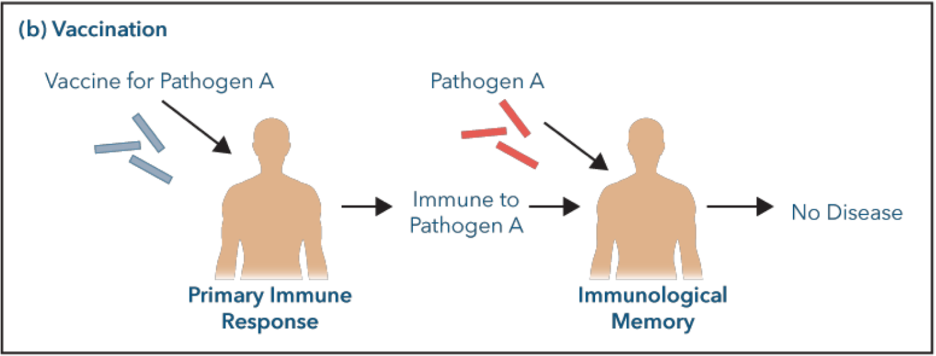
Conventional vaccines essentially work by mimicking the body’s natural response to a pathogen. Their goal is to prevent disease by deliberately exposing the immune system to a non-pathogenic or inactive form of the disease. Patients are injected with a small dose of the virus to “prepare” the immune system. In response, the immune system will create antibodies to fight off the foreign virus injected by the vaccine and thus, create a memory response the first time a pathogen is encountered. This way, the second time that same virus is encountered, the immune system will have natural immunity (see image below).

This has been the main method of vaccine development for the past several decades. It is a difficult and lengthy process with several steps involved. The vaccine needs to be developed, undergo pre-clinical and clinical testing, approval, manufacturing and control once out on the market. This whole process is very tedious and usually takes several years to complete. Though all vaccines come with potential side effects, this method has been the most widely used and accepted.

Many companies, like AstraZeneca, used this same mechanism to attempt developing a COVID vaccine but were faced with safety concerns along the way. Moderna and Pfizer were two pilot companies to challenge the status quo and attempt a COVID vaccine using mRNA.

mRNA Basics

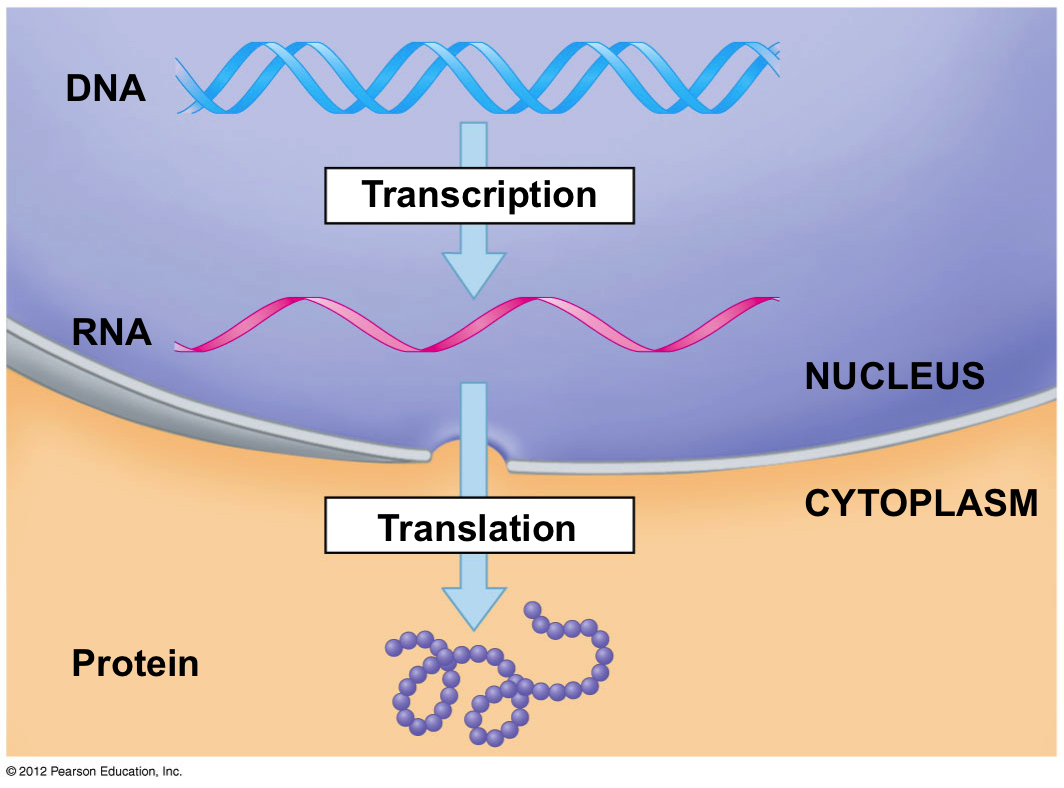
Messenger RNA (mRNA) is a type of RNA that contains the information cells need to make certain proteins. Cells use RNA to make proteins whose functions are to build and repair things in the body, just to name a few. Scientists manipulated this process and used it to develop a COVID vaccine.

Think of it this way: DNA is the “instruction manual” and mRNA is the messenger that takes a replicated copy of those instructions to the location in the cell where the “workers” are. The workers use the instructions to create the protein, which is used as a defense against foreign objects.

Importance of Spike Proteins Found on COVID

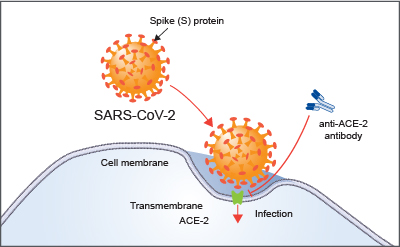
SARS-Cov-2, the virus that causes COVID-19, contains spike proteins on its surface. These spike proteins bind to human cells to penetrate, enter, and infect the healthy cells of individuals (see image below). Although humans themselves do not have spike proteins, they are able to detect them and block this binding process with antibodies. Creating these antibodies is the objective of a vaccine, which we discuss next.

The Vaccine Process

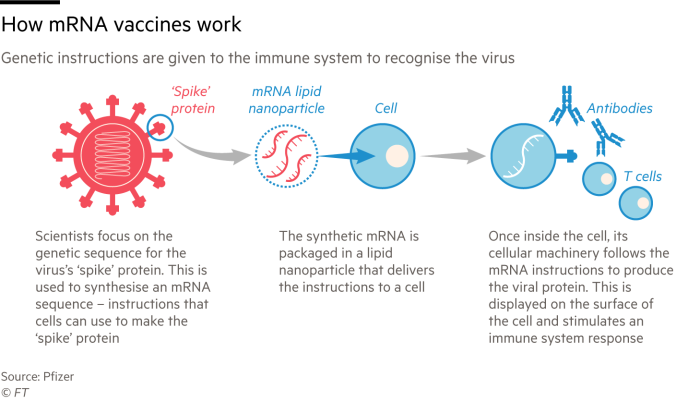
To start the development process of the vaccine, scientists had to isolate the virus from an infected individual. It was then sequenced (similar to getting a word for word write-up of the genetic information of the virus) and kept in a public database. Since spike proteins are part of the virus, their exact sequence was included. This made creating synthetic spike protein “instructions” a possibility.

The idea behind Moderna and Pfizer’s mRNA vaccines was to replicate the sequence (instructions) of the spike proteins into synthetic mRNA and inject this into humans through a vaccine. That way, the body would recognize the injected mRNA and cells would generate a small amount of spike protein. Recall that although humans do not have spike proteins, they are able to recognize them. Therefore, the body’s immune system would detect the spike proteins and build immunity against them.

That is in essence, the function of a vaccine. To produce a strong and quick memory response prior to natural infection. The Moderna and Pfizer vaccine do just that. They prime the immune system with just enough synthetic mRNA-generated spike proteins so that protective antibodies are made. This way, if an immunized individual becomes infected with COVID, they will have a much stronger and quicker response.

The benefits of mRNA vaccines seem to far outweigh those of conventional vaccines for multiple reasons:

Efficacy: They shown to be over 95% efficacious for both companies with minimal safety concerns reported to date.

Production time: mRNA vaccines can also be produced in a fraction of the time, a major key when faced with a global pandemic. Unlike conventional vaccines that take years to develop, Moderna and Pfizer were able to make theirs in a span of months. This is because

Production safety: Traditional vaccines involve producing and collecting a large quantity of virus and subsequently growing and manipulating it in the lab. An weakened or inactive version of the virus is injected into the body. This process is time consuming and can be hazardous. For mRNA vaccines, you do not need to make the virus to make the vaccine. Instead, information about the virus (ie. its sequence) is used, replicated and administered into the patient using synthetic mRNA.

All of these beneficial aspects of mRNA vaccines can potentially make it a breakthrough during the COVID pandemic and for future disease outbreaks. Since both mRNA vaccines for Moderna and Pfizer were made in a short period of time and phase 3 trials are still ongoing, there is a need for more substantial data.

Questions regarding the long-term safety of the vaccines remain and are at the forefront of everyone’s mind. There is also a question of protection duration provided by the vaccines. Once antibodies against spike proteins are made, do they last indefinitely? Or do they dwindle down months later? Only time will tell.

Drug Approval of Aducanumab for Alzheimer’s Gets Shut Down by AdCom, Now the FDA Must Decide

Drug Approval of Aducanumab for Alzheimer’s Gets Shut Down by AdCom, Now the FDA Must Decide

Drug Approval of Aducanumab for Alzheimer’s Gets Shut Down by AdCom, Now the FDA Must Decide 

November 10th, 2020

  • Biotech company, Biogen, was put under the knife regarding their drug aducanumab for the treatment of Alzheimer’s disease (AD)
  • The FDA organized a meeting with an AdCom to discuss the data presented by Biogen where the AdCom voted against the drug for AD
  • Biogen now waits for final decision by FDA in March 2021

Biogen’s aducanumab has the potential to be the first approved drug able to slow the progression of Alzheimer’s disease (AD). Read about the FDA’s process for controversial drugs such as aducanumab.

AD is a debilitating neurological disorder that progresses into mood changes, distorted thinking and is the main cause of dementia. It eventually leaves those affected with the inability to live independently, unable to perform the simplest of tasks. The idea behind the disease is that a protein called beta amyloid abnormally forms plaques around brain cells while another protein, tau, tangles itself within brain cells. AD, along with other dementia diseases, affects more than 40 million people worldwide with no cure to date.

Currently, the main focus of treatment is on maintaining the symptoms of the disease using cholinesterase inhibitor drugs such as Razadyne and Aricept. Their exact mechanisms of action towards treating AD are unclear but research suggests that they inhibit the breakdown of acetylcholine, an important chemical in the brain related to learning and memory.

Biogen Submits Application for FDA Approval with Subpar Data

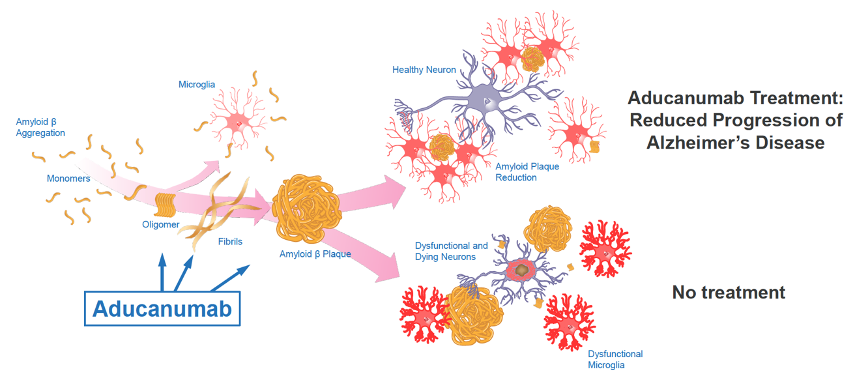
Biogen’s goal was to develop aducanumab for the treatment of AD and get FDA approval for market. It is a monoclonal antibody that binds to and eliminates beta amyloid plaques in the brain. AD is one of the largest and fastest growing diseases in the US so if aducanumab gets approved, it could transform the AD space and become one of the best-selling drugs with revenues greater than $10 billion annually.

In order for a drug to get approval for market sale in the US, companies need to show safety and efficacy data from their clinical trials. They must submit an application to the FDA with data from two large and well-controlled clinical trials. Biogen submitted this information, their EMERGE and ENGAGE studies, regarding aducanumab to the FDA. The data from EMERGE showed promising results however, data from ENGAGE failed.

After the failed data had come out, Biogen re-evaluated and announced that if interpreted a certain way, ENGAGE does, in fact, show meaningful results. This is called a post-hoc analysis.

Post-hoc analysis reaches conclusions after the data has been seen. It is usually risky and rarely endorsed by the FDA. It can be useful for researchers to come up with hypotheses for future studies but not to come up with conclusions on a present study. This is why the FDA looks for endpoints defined before the commencement of the study. It ensures there is no bias or data dredging (exploiting the data to identify conclusions that can be presented as statistically significant).

Nonetheless, Biogen decided to use post-hoc analysis, move ahead and submit their drug for approval by the FDA.

What is an AdCom & Why Did Aducanumab Need One?

The FDA has advisory committees (called AdComs) which are groups of experts that consist of scientists, researchers, and patient representatives, just to name a few. They can organize a meeting at any time during the drug review process or whenever the FDA is seeking extra advice or recommendations. They review company applications and give independent advice to the FDA regarding the data. Generally, the FDA will call upon an AdCom when the case is not clear cut. In Biogen’s case, aducanumab had mixed results, but it is targeting an indication that has not seen a breakthrough in decades. The need for a treatment is dire.

It is important to note that even with an AdCom recommendation, it is the FDA who has the final say on whether the drug is approved or not. Sometimes, the FDA will go against the AdCom recommendation.

The FDA released a long 343 page document in which FDA scientists seemed to validate the aducanumab data, claiming the results being “highly persuasive” and demonstrating the “effectiveness of aducanumab” (page 57). Since the submission for aducanumab contained difficult data to interpret, with altered analyses, the FDA saw fit to round up an AdCom for further advise on the drug. The meeting was scheduled for Friday, November the 6th, two days after the positive briefing documents were released.

Tensions were high leading up to the day because if aducanumab gets approval as therapy for AD, it would become a multibillion-dollar drug. Even if associated with certain adverse events and only a proportion of those with AD were treated with aducanumab, it would still be seen as a golden ticket. The amount of people suffering and the lack of any current therapies to slow the disease progression would make aducanumab a blockbuster drug.

However, once the members of the AdCom came together, the overwhelming majority of the vote was against the efficacy of aducanumab for AD. In fact, 10/11 panel experts voted “NO” to the lone successful study being strong enough evidence of aducanumab effectiveness.

Though the FDA originally seemed in favor of aducanumab and now the AdCom is against it, it is still unclear whether it will be approved or not. Recall that the AdCom is just a recommendation and that the final decision will be left to the FDA. The FDA’s final decision date (called “PDUFA”) has been scheduled for March 7, 2021.

History Shows That Not All Hope Is Lost Post Negative AdCom

A similar situation was seen in 2016 with drug development company, Sarepta. Their drug, eteplirsen was developed for the treatment of Duchenne muscular dystrophy (DMD), a fatal muscle degenerative disease. Similar to AD, there was an urgent need for therapy against the disease. An AdCom meeting was organized and the panelists voted against eteplirsen for the treatment of DMD. The FDA made the final decision on September 19th, 2016 to approve eteplirsen as the first drug able to treat DMD. Exondys 51, the commercial name for eteplirsen, is on pace to do $450M in sales for 2020.

As you can see, the decision to approve a drug for market sale is not easy. There are years of research and contemplating involved. Although an AdCom is very beneficial as they provide expert advice on the data, ultimately, the final decision is left up to the FDA. As seen in the DMD example, the AdCom voted against eteplirsen but in the end, the FDA decided in favour of its approval. The question now is how the data given by Biogen and the recommendation provided by the AdCom will alter the decision of the FDA towards the approval or disproval of aducanumab. Judgment day is scheduled for March 2021.

Technologies Making 100th Birthday A Normality

Technologies Making 100th Birthday A Normality

Technologies Making 100th Birthday a Normality

November 9th, 2020

  • The advancements in gene sequencing, gene editing and artificial intelligence are driving the longevity of lifespan
  • Next-gen approaches are identifying illnesses sooner to improve treatment and increase survival rates
  • Although research such as gene therapy is still in early clinical stages, there is a cause for excitement

There has been a growing interest in the possibility of slowing aging, with some scientists even claiming there might be a way to reverse it.

Here we are going to discuss the latest in aging news, where the science stands now and what the future holds.

Reversing aging consists of more than just looking young. Aging is a multifactorial process that involves the degeneration of cells, weakening of muscles and decreasing efficiency of the heart, bones and metabolism. It is accompanied by an increase in undesirable conditions such as cancer and heart disease, just to name a few. The goal is to find methods that can extend the longevity of humans and a large part of that is rooted in identifying and treating illnesses as early as possible.

What is Gene Sequencing

Gene sequencing identifies high risk markers that could predict incoming illness. As we know, DNA is the hereditary material that humans are made of. It is a long chain of molecules that form our genes. Scientific techniques developed over the years have the ability to essentially read our DNA like a book and discover parts that signify disease. It has the ability to reveal genetic disorders or disease predispositions allowing the patient to seek personalized and preventative care, possibly years before the disease develops. For example, it has been found that those with a genetic variant of gene apolipoprotein E (APOE), specifically APOE4, are at an increased risk of developing Alzheimer’s disease.

Researchers at NIH have developed the Cancer Genome Atlas Program where they have been using gene sequencing to characterize a number of cancers. A technique called liquid biopsy is able to identify cancer DNA in the blood which might have been otherwise undetected. This is incredibly significant as it is well known that identifying a cancer as soon as possible is a key factor in its treatment and cost.

Pharma Companies Utilizing Gene Sequencing for Disease Targeting Aging

For years, the focus of cancer therapy was on tracking the progression of the disease, once detected, and its response to treatment. The focus has now been shifted to detecting the disease as early as possible. Though it is a new and growing area of research, several pharma companies have already been working on it, and some shown promising results.

One such company gaining a lot of traction is GRAIL, whose simple blood test is able to screen for over 50 types of cancers at early stages, with over 90% accuracy of its location in the body. GRAIL touts that cancer diagnosed at earlier stages can lead to survival rates 5-10x higher than late stage diagnosis.

Another company, Freenome, is using a similar approach, and is focused on identifying colorectal cancer. The company studies thousands of cancer-positive blood samples, and learns which biomarker patterns signify a cancer’s stage, type, and most effective treatment pathways. The company is currently running a 14,000-participant trial (called PREEMPT CRC clinical study) to collect blood samples from those undergoing standard-of-care screening colonoscopies. 

CRISPR Gene Editing 

CRISPR is a key player in the longevity research roster. To explain it as simply as possible, CRISPR acts a pair of scissors able to cut out mutated genes and insert desirable ones. It is a ground-breaking and revolutionary way of editing genes that essentially allows scientists to “rewrite” the code of life.

One way CRISPR is being used for gene editing is by engineering the body’s own T cells. This way, the patient’s own immune system is being reconditioned to attack diseased cells (for more information about T cells and the immune system, read LifeScite’s NK Cells for Dummies: Understanding the Next Cancer Paradigm and NK Cells: Oncology’s Next Big Wave). This concept was already being tested in a phase 1 clinical trial of three patients with advanced, refractory cancer. Although the sample size was small and ongoing research is necessary, the trial found that the engineered T cells were present in the tumor locations of all three patients with no observed toxicities.

CRISPR Therapeutics is currently running several trials targeting hemoglobinopathies (sickle cell disease) and oncology (blood cancers for now).

Artificial Intelligence

Another major contributor is artificial intelligence (AI). Now that there is an extensive network of patient information from all the sequencing and imaging tools developed over the years, AI is the only way that is able to interpret the abundance.

One company, Insilico Medicine, is using AI to discover drug compounds focused on slowing down aging at the cellular level. Senescent cells are ones that have stopped dividing, and thus reproducing, though they are still able to function. It is thought that an accumulation of these cells is correlated with the onset of disease. Insilico plans to use AI mechanisms to find therapeutic targets and molecules that are aimed at senescent cells. Its partner company, Taisho, will then validate these molecules in the lab and clinic.

Insilico has worked to develop what it calls “deep aging clocks,” a set of biomarkers identified by neural networks that allow for a more refined picture of a person’s cellular age, compared to the simple number of their trips around the sun. Potential applications of Deep Aging Clocks in the pharmaceutical industry includes, but not limited to; age personalized treatments, mortality prediction, preventative medicine, dementia screening/staging. See more potential applications below.

So far, the idea of extending the average lifespan is gaining more traction. Several mechanisms of doing so are mentioned above, but many more are being developed as we speak. We are still in the early innings of aging research.